

MIDI was designed to contol notes between synthesziers in 1983.
Four decades on, a sizeable slice of what it actually controls is light — video clips, camera feeds, shaders, LED strips, DMX fixtures, 3D worlds.
We went back through every MIDI Innovation Award entry ever submitted, from the first year through the 2026 cycle, and pulled out the ones that use MIDI to drive something the audience looks at. There are more of them than you might expect, and read together they say something fairly clear about where MIDI control of video and graphics stands right now.
VJs finally get their own hardware
For most of MIDI’s history, visual performers borrowed. A grid controller built for Ableton clip launching became a clip launcher for Resolume. A fader bank meant for mixing became an opacity bank.
The 2026 entry BitchBoy from BLOCK SYSTEM Hardware puts that bluntly: “For years VJs have been making due with MIDI controllers made for music… we wanted to finally solve this problem.”
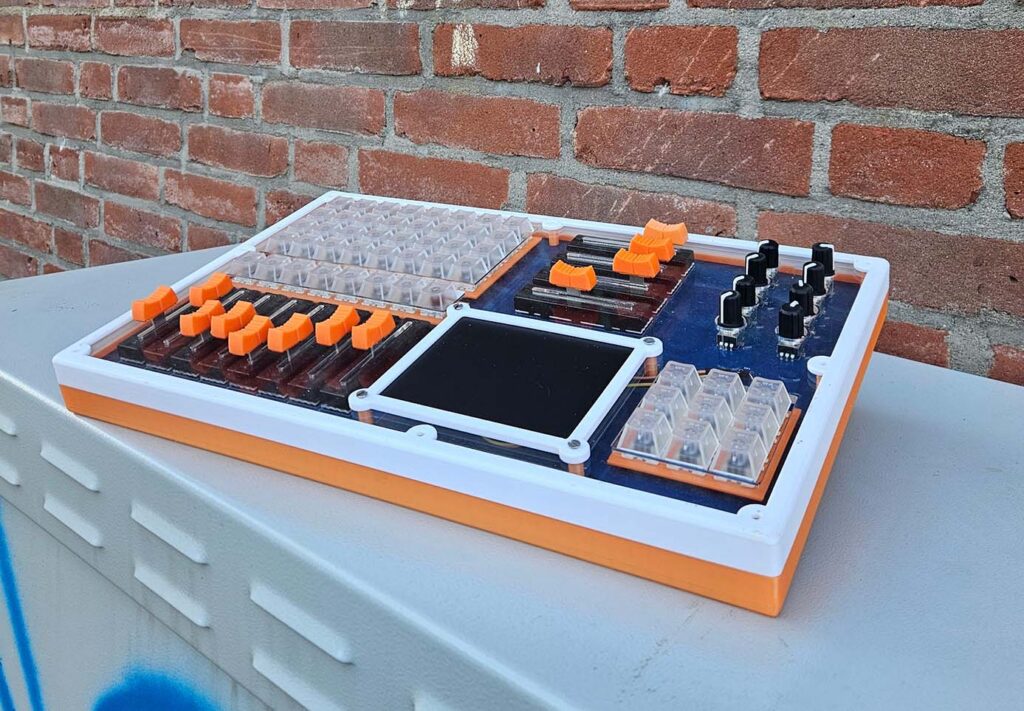
Their answer is a VJ-centric layout — mixed vertical and horizontal faders, zero-contact faders, high-profile LED keyswitches — aimed at Resolume and TouchDesigner rather than at a DAW. You can follow the build at bitchboy.lol and @bitchboy.vj.
Two other entries attack the same problem from the hardware side, and both are notable for how little they ask of the performer.
The MSC-01 MIDI Serial Control, from VJ Avant and Bill Kingsley, converts MIDI Notes and Program Changes into serial commands that fire up to 127 video files on a MedeaWiz Sprite 4K player — no computer in the signal path at all.
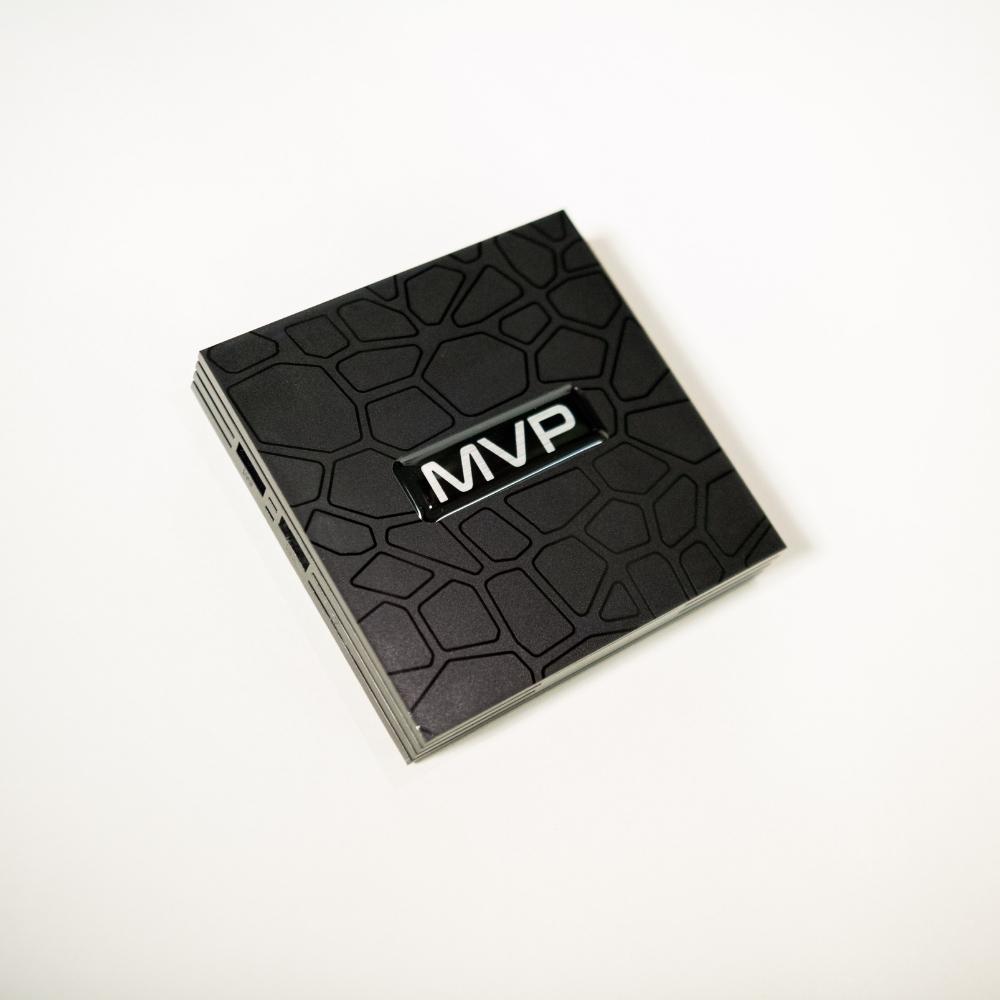
4CAST MVP makes the economic argument explicit: stage video and lighting “cater solely to the top 1%,” and the MVP compresses media-server and VJ-software functions into a plug-and-play box driven by MIDI. Both are, in effect, arguing that MIDI is the cheapest reliable way to put video cues in a musician’s hands.
The performer runs the visuals
The software entries point the same direction: away from a separate operator at the back of the room, toward the person already playing.
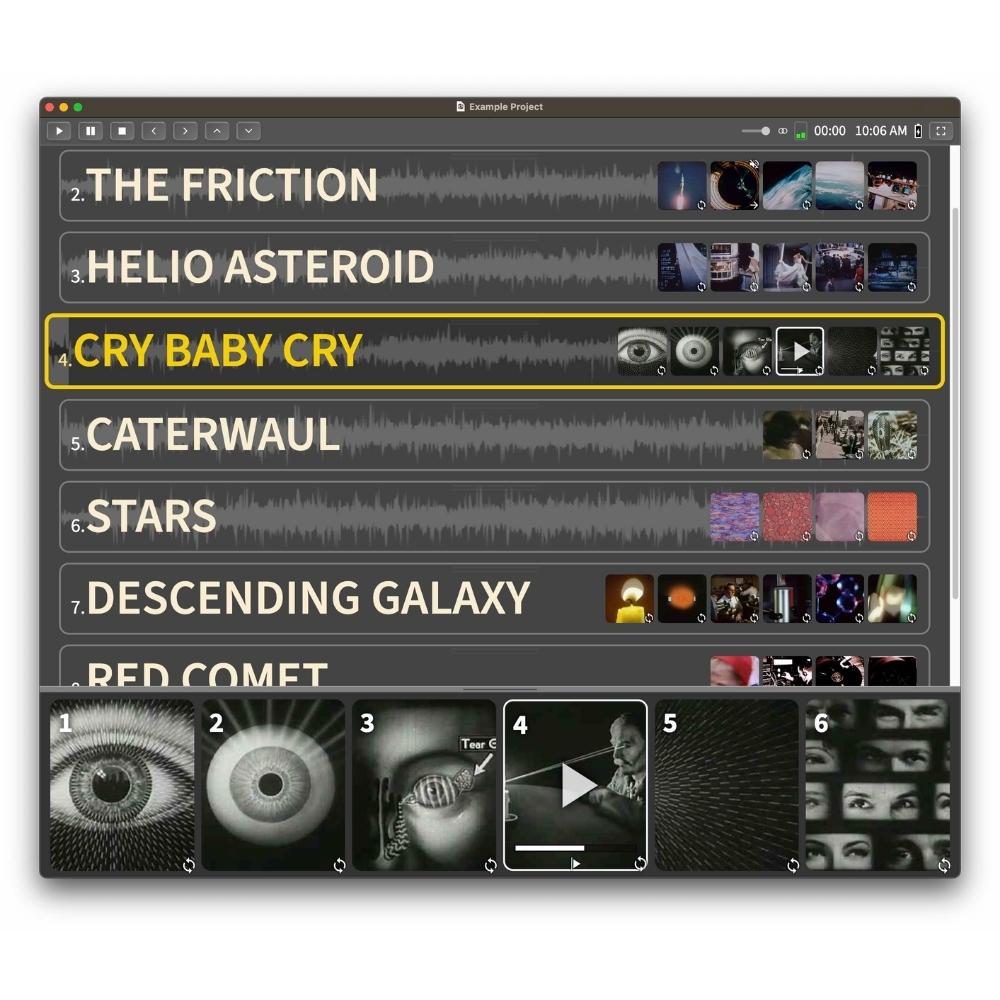
- Visibox from Spaceage lets a performer trigger videos, images, cameras and backing tracks from MIDI keyboards, pads, drum triggers or foot pedals — “essentially edit together a music video in real-time, in time with the music, without needing to play to a click.”
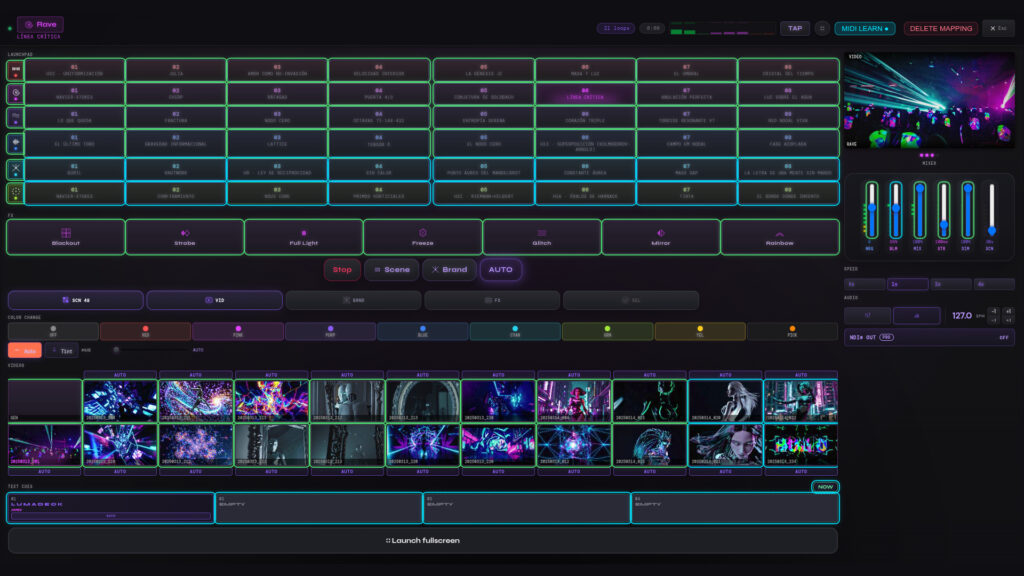
- LumaDeck Web (2026) turns a browser into a MIDI-controlled visual instrument, separating the performer’s control view from a clean audience output, with nothing to install.
- CHROMOLA (2025) runs the loop in both directions: webcam and video files become a control surface via computer vision, while MIDI notes 100–127 fire media clips — audio driving visuals driving audio.
Outside the awards, the same idea has a commercial anchor in Showsync, whose Beam for Live turns Ableton Live into a lighting engine — DMX over Art-Net, unlimited universes, fixture profiles — so that the lighting cue lives in the same session, on the same timeline, as the music.
MIDI as the bridge to DMX, LEDs and machines
A consistent cluster of entries exists purely to translate.
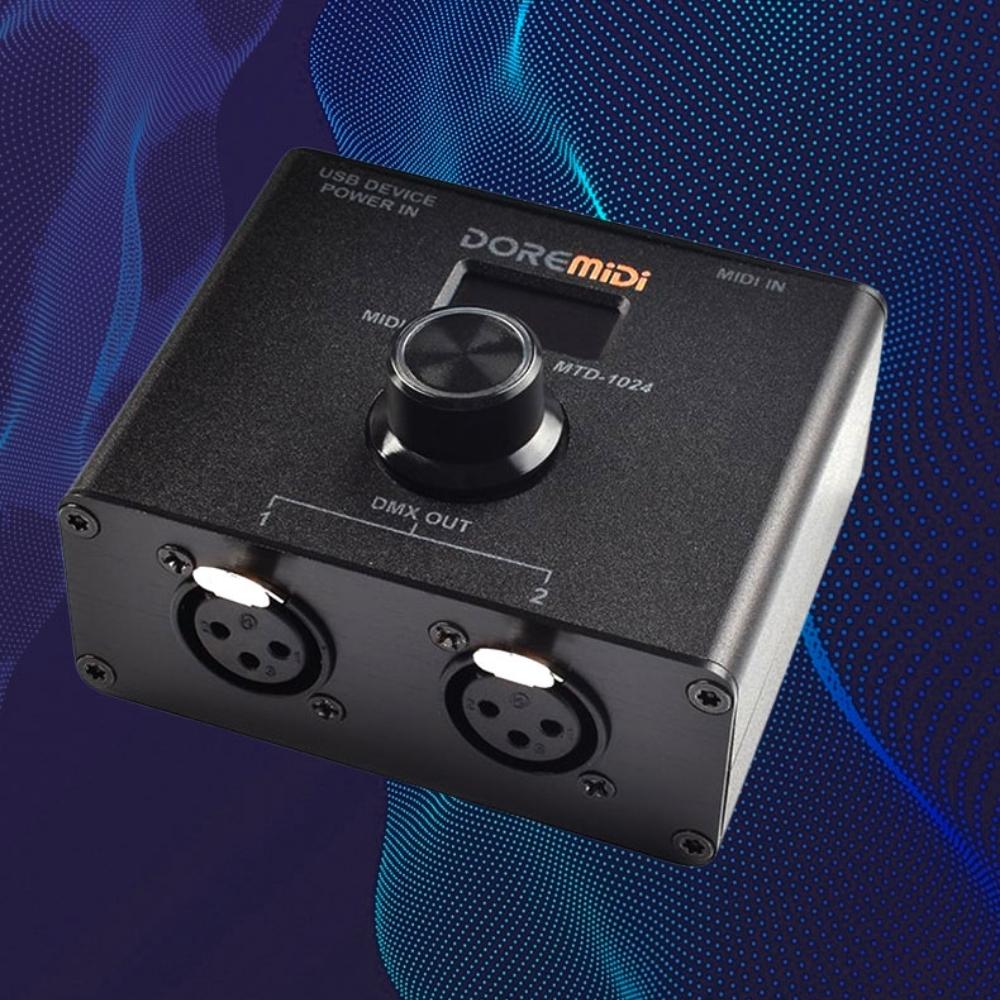
DOREMiDi’s MIDI To DMX Controller (above) and .NOISE’s LC-1X+ (below)
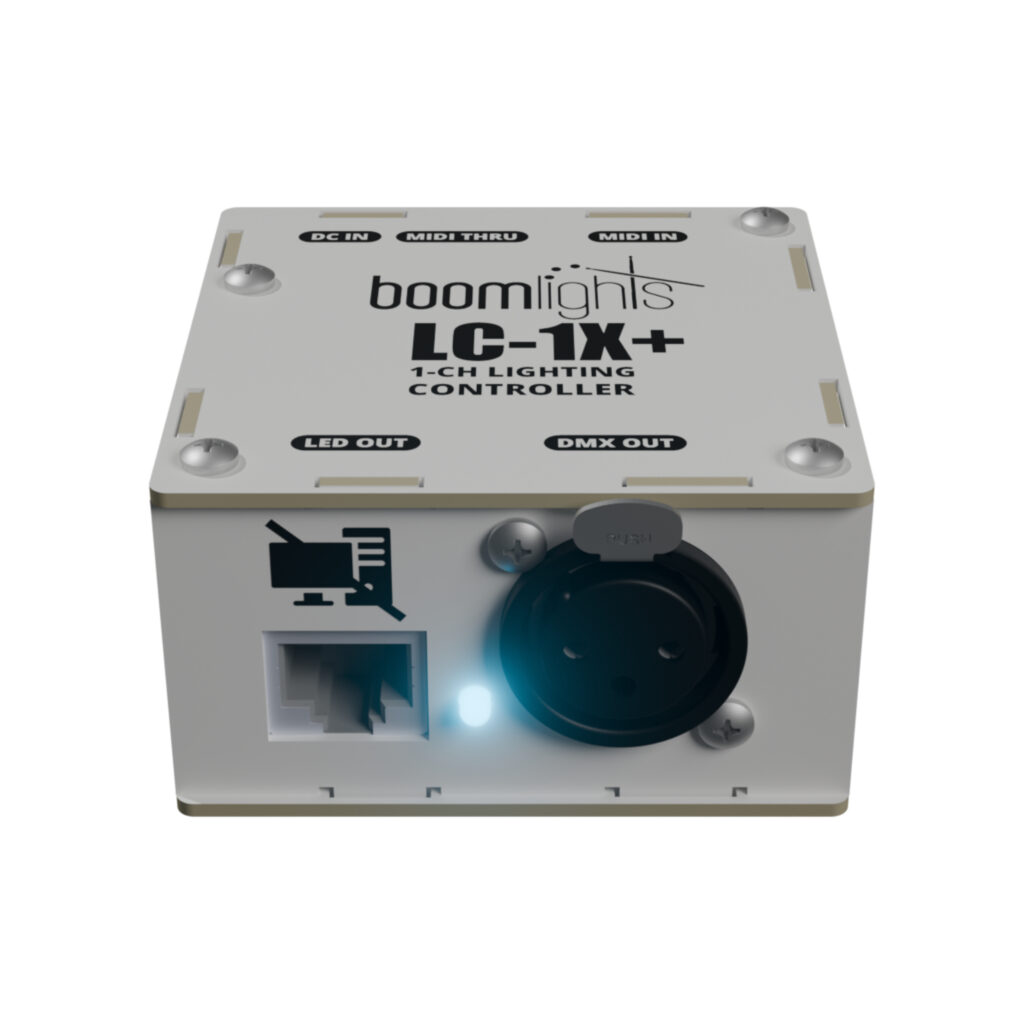
move note and controller data into the lighting world.
MIDIDIM drives LED strip brightness and color from MIDI Clock.
HootBeat puts wireless LED wearables on performers, reacting to MIDI messages.
DigiShow LINK (2025) goes furthest, mapping signals across audio, lighting, robotics and interactive devices as one open-source cross-media console.
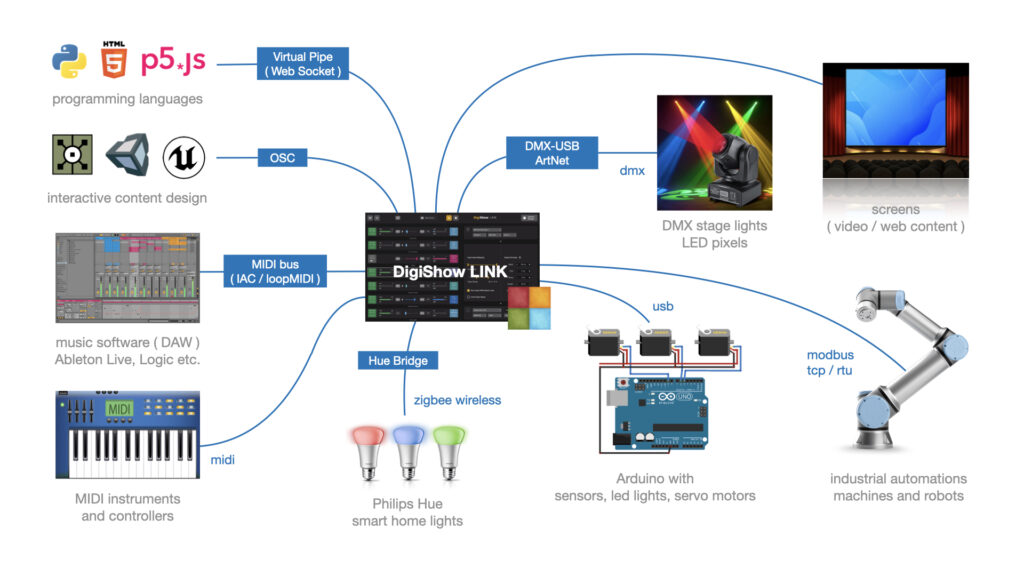
This is the least glamorous category and arguably the most telling. These products exist because MIDI is already in the rig, already clocked to the music, and already understood by everyone on the crew.
Installations, where the visual is the instrument
The Artistic/Visual Project and Installation category has become the awards’ richest vein of MIDI-driven imagery.
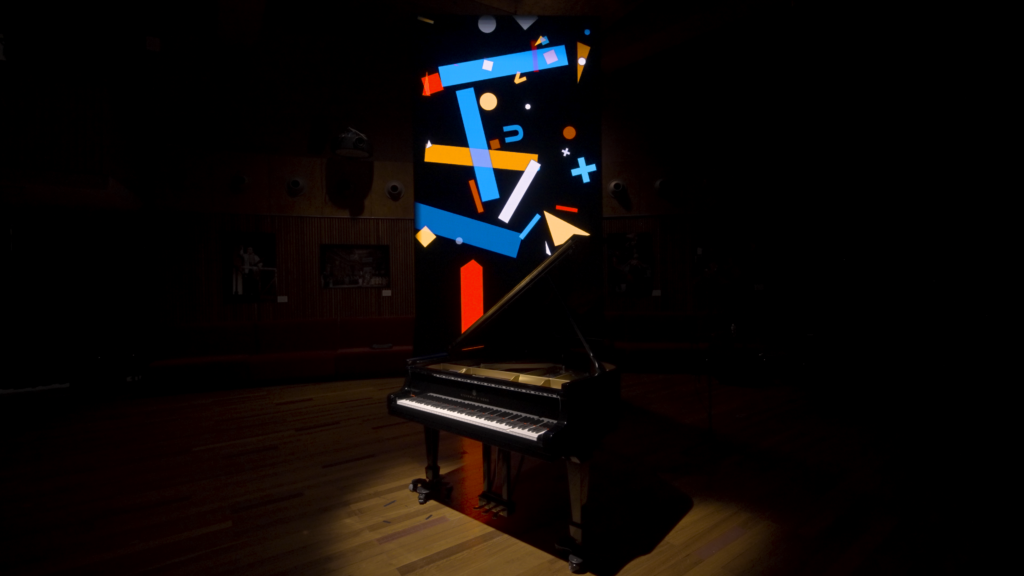
Playmodes Studio’s ppff (2024) is a generative audiovisual work built around a MIDI player piano.
Particle Shrine (2024) transmutes live cosmic-ray data into a reactive audiovisual environment.
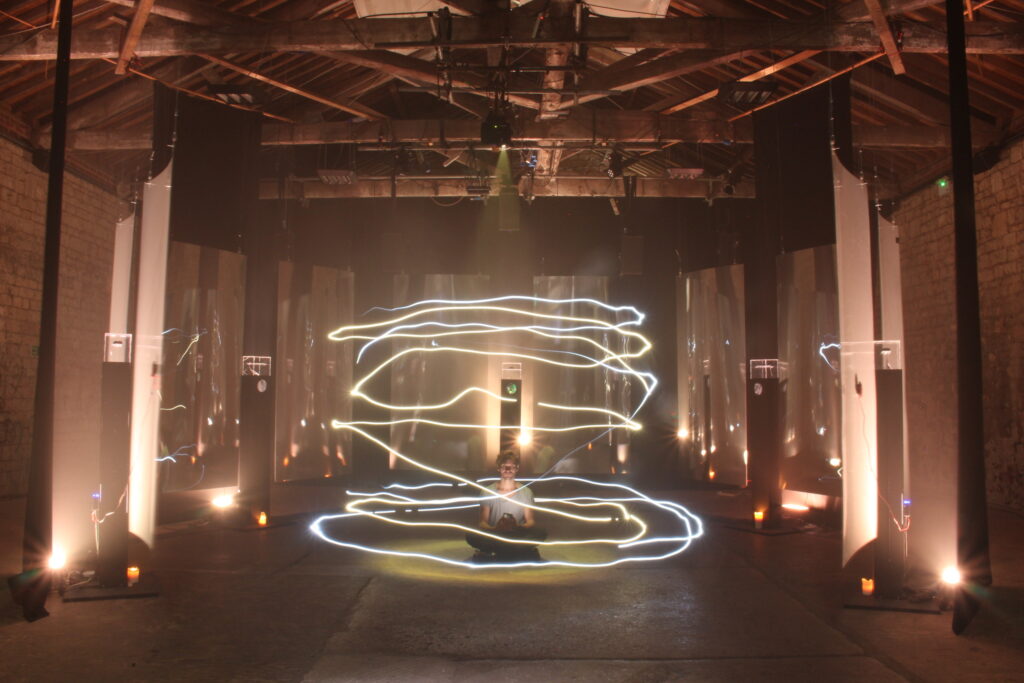
EM-OMEGA turns dancers’ bodies into MIDI and OSC.
Earlier entries such as Leaf Secrets and turns plant biodata to sound and light.
Telemidi “SHOALZ” (two musicians on separate continents generating a shared visual environment).
EightNote (magnetic tokens producing rhythms and visuals) show the pattern going back years.
By the way, we were sadden to learn that Robin passed away this year rather suddenly and we will be featuring a tribute to him at Music China 2026.
Screens as playable space
A fifth group treats graphics not as accompaniment but as the interface.
Moog’s Animoog Galaxy built a sonic and spatial experience for Apple Vision Pro.
Anukari makes a 3D physics simulation the synthesizer itself.
GenuXR has a performer create music in VR that drives their environment;
Minecraft & MIDI Connections did it inside a game engine;
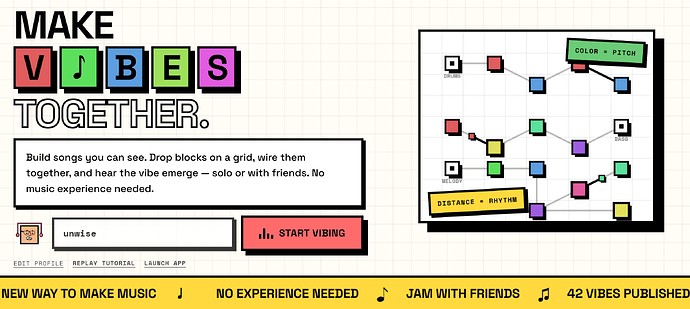
Vibe Together (2026) turns MIDI into a multiplayer 3D sandbox.
So what is the state of the art?
Three things stand out across roughly four dozen entries.
MIDI wins on ubiquity, not on fitness.
Nobody chooses Note On to launch a 4K clip because it is the ideal message for the job. They choose it because every keyboard, pad, pedalboard, DAW and sequencer on the planet already sends it, and because the musical timeline is the thing the visuals need to follow.
The vocabulary is improvised.
Notes and Program Changes become clip and scene selects; CCs become opacity, speed, hue, blend mode; MIDI Clock becomes the sync spine. None of that is standardized. A VJ’s map is bespoke to their rig, which is exactly why every one of these products ships its own mapping layer — and why OSC, Art-Net/DMX, NDI, Ableton Link and timecode keep showing up alongside MIDI rather than being replaced by it.
This is where MIDI 2.0 has room to run.
Visual parameters are exactly the case where 7-bit resolution shows its age — a slow fade across 128 steps is visible as stepping in a way that a filter sweep often is not. MIDI 2.0’s 32-bit controller resolution, per-note controllers, and bidirectional Property Exchange and Profiles point at something the visual world has never had from MIDI: a device that can announce what its parameters are, so a controller and a media server can agree on “layer 3 opacity” without a human building the map by hand. Nothing like that has been standardized for video yet. Based on what is showing up in the awards, it is the most obvious gap worth filling.
Live music is watched as much as it is heard, and the people building for that reality keep reaching for MIDI.
If you are working on something in this space, the MIDI Innovation Awards are where we would like to see it.