

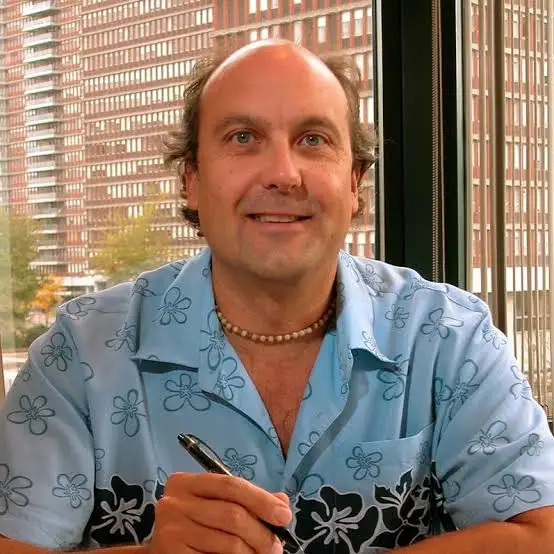
When David Kusek receives the 2026 MIDI Association Lifetime Achievement Award at the NAMM Show, the honor reflects not only a single innovator’s achievements—but the legacy of a company that helped define the modern concept of computer-based music creation.
Youtube Summary Video
Over nearly two decades, Passport Designs delivered tools that opened digital music-making to educators, home studios, and emerging professionals.
Founding and Early Years (1979–1982)
Passport Designs was founded in 1979 by David Kusek and John Borowicz, and formally incorporated in 1980, with Kusek as CEO and Borowicz as Vice-President of Development.
Early Beginnings: A Vision for Computer-Assisted Music Creation
In the late 1970s and early 1980s, personal computers were beginning to appear in classrooms, homes, and small studios, yet very few people imagined they could become serious musical tools. Kusek saw the potential immediately. With a background in electronic engineering, music, and emerging digital technologies, he recognized that computers could democratize music-making—not replace instruments, but amplify what musicians could do.
What followed was one of the most important pioneering eras in the history of computer music.
Soundchaser: A Pre-MIDI Breakthrough
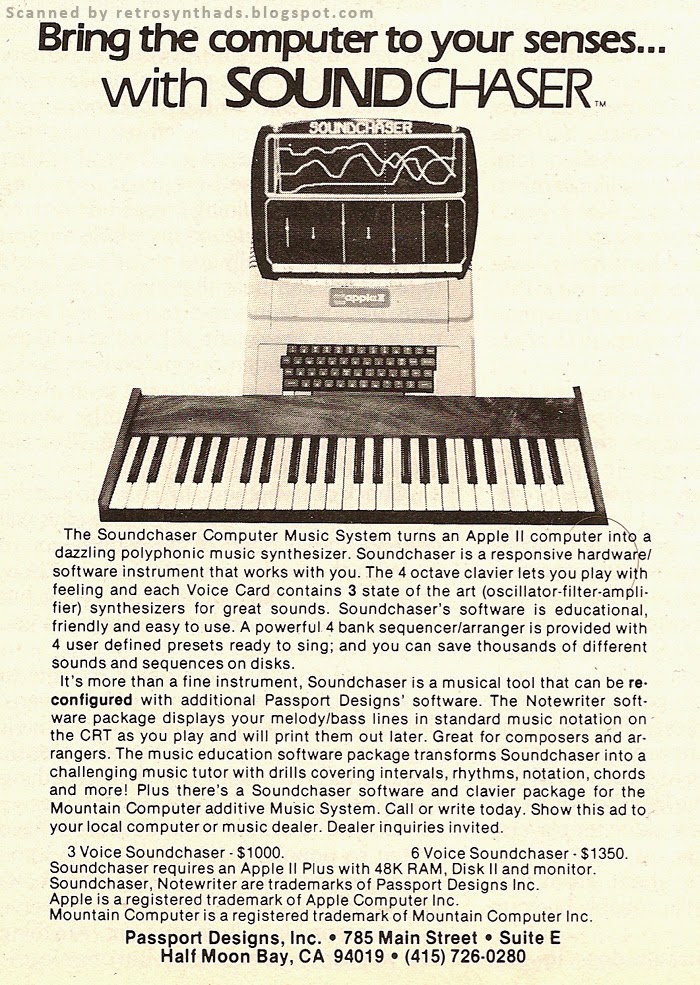
One of Passport’s earliest innovations was the Soundchaser Computer Music System, a groundbreaking pre-MIDI platform for the Apple II. Before any universal standard existed, Soundchaser delivered a complete digital music workstation that included:
- A full-sized piano-style keyboard

- A proprietary Apple II interface card
- Digital or analog voice cards offering polyphonic synthesis

- A four-track recording and editing environment
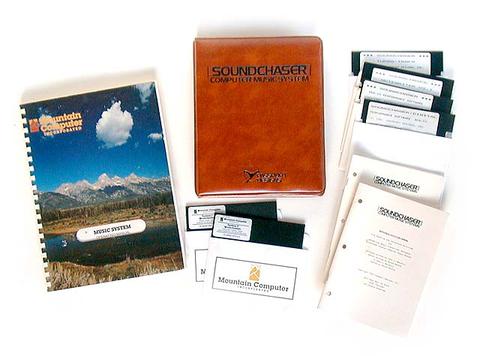
Soundchaser transformed an Apple II into a polyphonic, computer-controlled synthesizer. For many musicians, this was their first exposure to multitrack digital recording, editable note data, and computer-assisted composition.
The Arrival of MIDI and Passport’s Rapid Expansion
Passport Designs immediately embraced the MIDI standard in 1983, shifting from proprietary systems to a universal communication language. This marked the beginning of Passport’s most influential decade.
Kusek helped lead the development of some of the earliest commercially available MIDI applications, including:
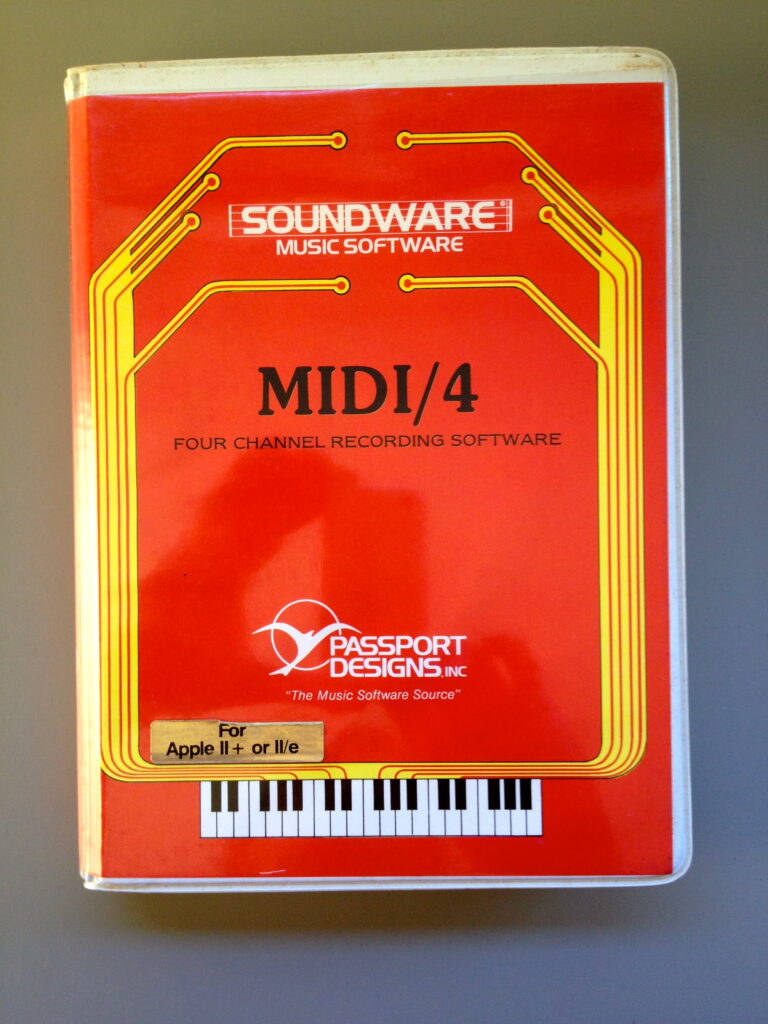
- MIDI/2 and MIDI/4 — early sequencers for the Apple II
- Master Tracks and Master Tracks Pro — powerful multi-track MIDI sequencing systems
- Encore — one of the first widely adopted professional music-notation programs
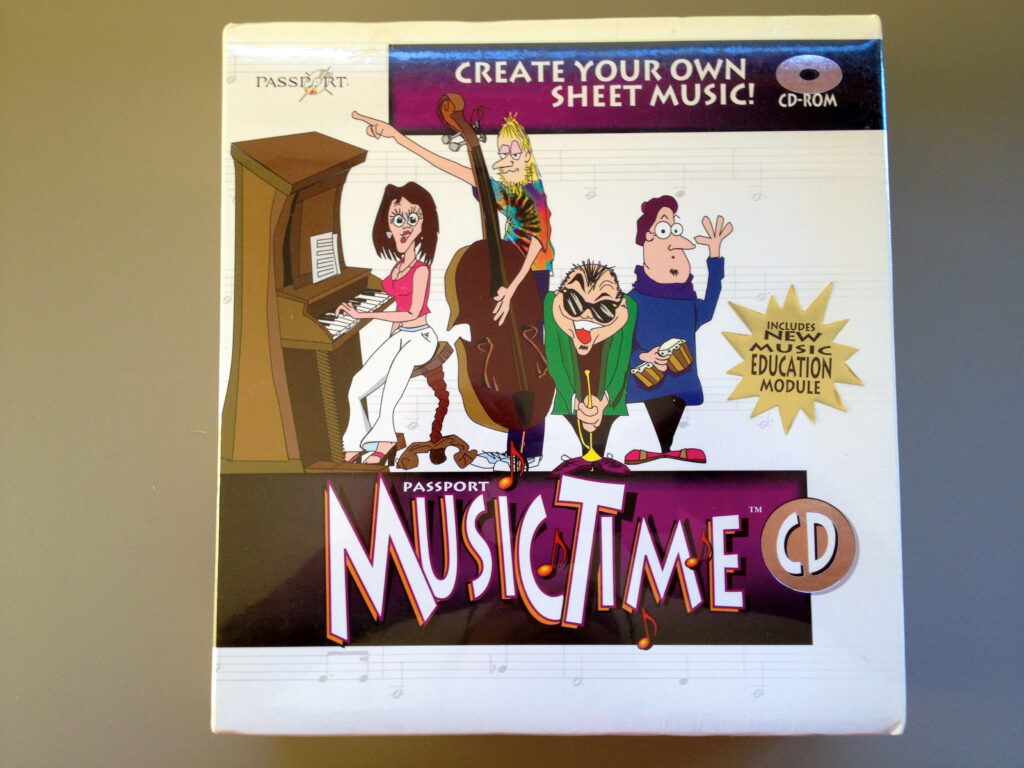
- Music Shop, Music Time and other educational packages
Master Tracks Pro
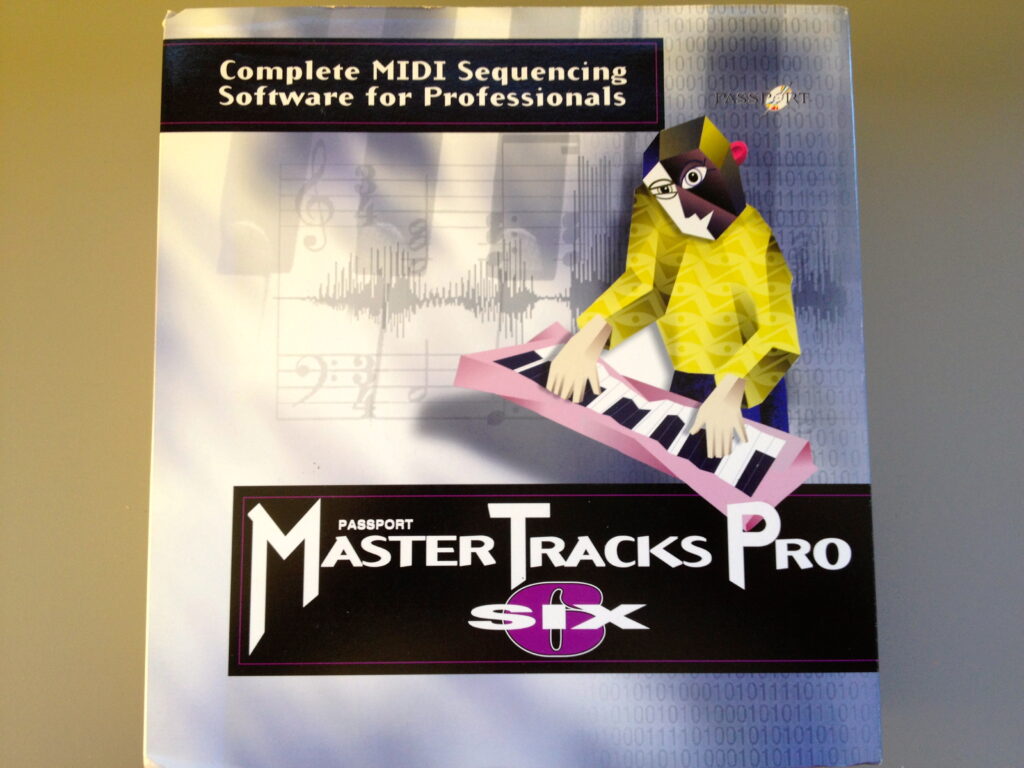
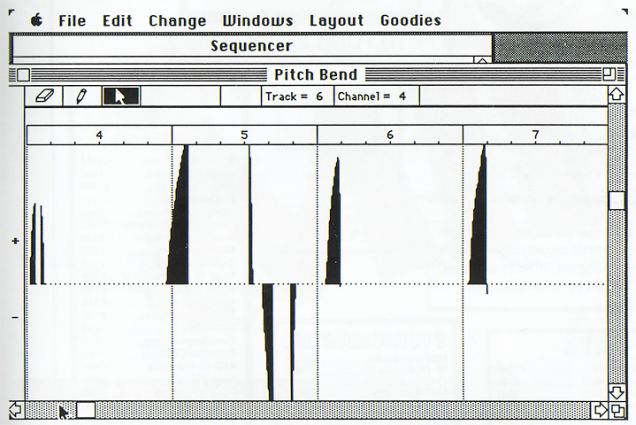
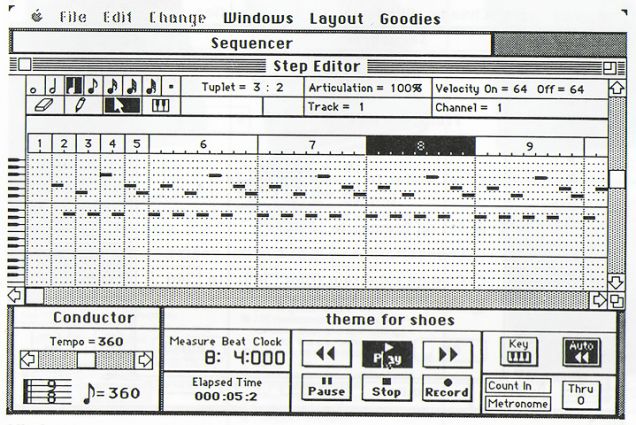
Master Tracks Pro became a staple across home studios, educational labs, and professional setups. Its track-based interface, graphical editing, and real-time recording capabilities helped define what musicians would come to expect from a sequencer.

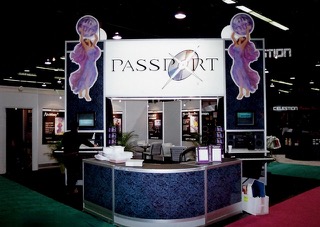
In the late 1980s, John Borowicz went to work for Coda Music Software developing the notation software Finale and Denis Labrecque joined Passport as Vice President. Denis has always been a big proponent of MIDI and served on The MIDI Association Executive board for several years and is still driving force behind the MIDI In Music Education initiative.
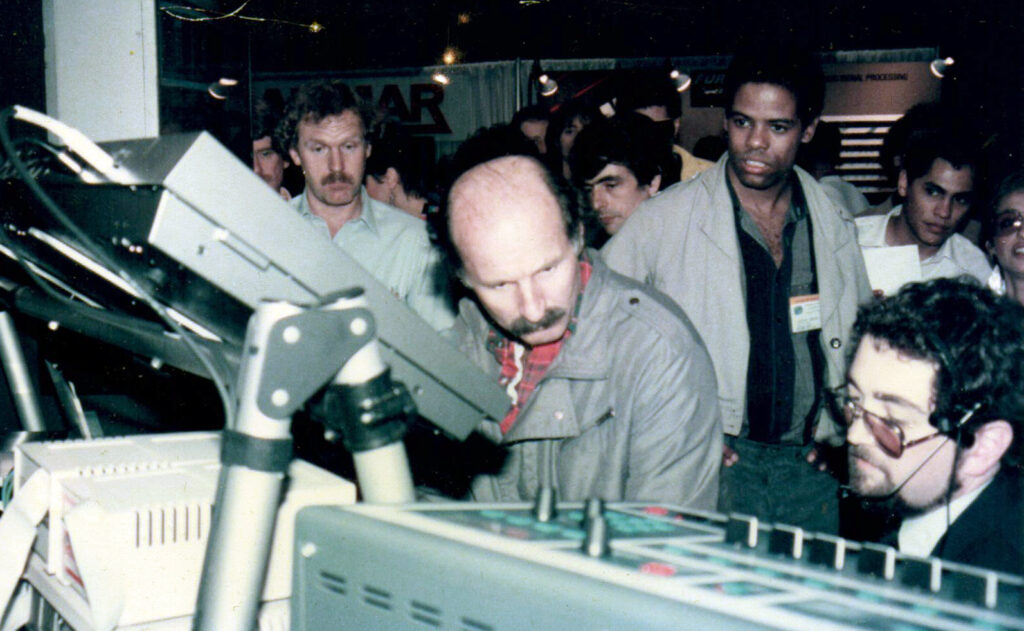
https://www.namm.org/library/oral-history/denis-labrecque
Sidebar: Passport Designs and Rittor Music — A Bridge to Japan

One of the most important but often overlooked chapters in Passport Designs’ history is its partnership with Rittor Music in Japan. Rittor, a leading publisher of music-technology magazines and educational books, became Passport’s key distribution and localization partner in the Japanese market.
Through Rittor, software like Master Tracks Pro and Encore reached Japanese musicians, schools, and studios with:
- Japanese-language manuals and tutorials,
- Feature articles and reviews in music-tech magazines,
- Classroom integration through books and teaching materials, and
- Retail distribution via trusted instrument and software dealers.
This relationship mattered for MIDI because it helped harmonize workflows across continents. Musicians in Tokyo and Los Angeles learned sequencing and notation using very similar concepts and tools. Japanese hardware manufacturers saw Passport’s software in everyday use and tuned their MIDI implementations accordingly.
In a pre-internet era, the Passport–Rittor partnership was a rare and powerful transpacific bridge, ensuring that early MIDI tools and practices could evolve as a global ecosystem rather than isolated regional experiments.Educational Innovation and Democratizing Music Technology
Education was central to Kusek’s vision. Passport was one of the first companies to create music-education software for home and classroom use. Through tools that taught rhythm, notation, sequencing, and ear training, Passport helped introduce tens of thousands of students to electronic music long before school music labs became common.
This educational mission reflected a core belief: technology should widen access to creativity, not gatekeep it.
For an idea of how Rittor Music is still influencing MIDI in Japan, check out this link.
https://www.rittor-music.co.jp/product/search/?keyword=MIDI
Encore Notation Software
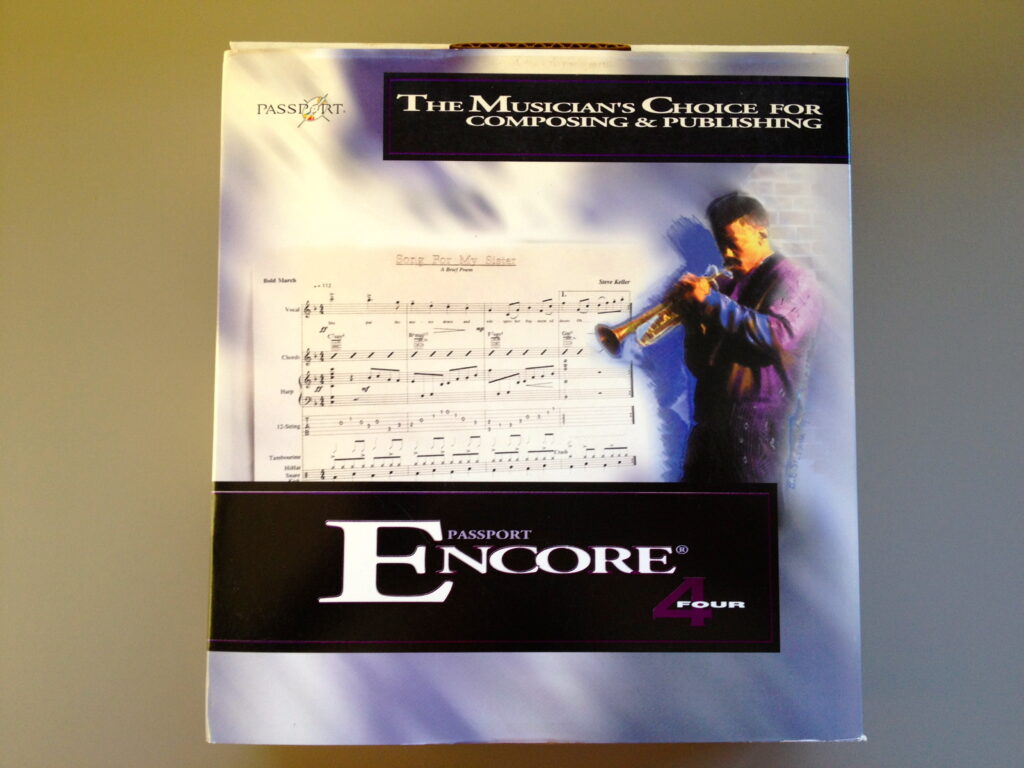
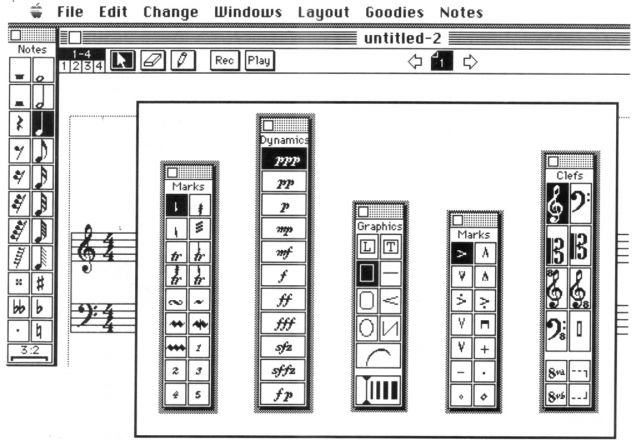
Encore succeeded because it struck a balance between professional capability and approachability. It wasn’t as complex as Finale or later Sibelius, but it was fast, intuitive, and visually clear. Its musicians-first workflow helped thousands of students, educators, arrangers, church musicians, and composers adopt computer notation for the first time.

Many modern musicians still consider Encore their “first notation software” and credit it with teaching them digital engraving concepts that later carried over into more advanced tools.
Encore was used and influenced by Universal film studios in the late 90’s, enabling them to shorten movie score production from one score a month to one score a week. Many notable Hollywood TV music was also scored with Encore.
The 1990s and Industry Influence
Throughout the 1990s, Passport Designs continued developing professional and consumer-level software. Products like Master Tracks Pro and Encore remained essential tools, especially in American schools. Passport also branched into multimedia creation, taking advantage of CD-ROM technology and early cross-platform capabilities.
Although competition intensified, Passport’s role as an early innovator shaped the standards that later DAWs and music-education programs would follow. Many users who transitioned to later platforms—Logic, Pro Tools, Performer, Cubase—cut their teeth on Passport’s tools.
The End of Passport Designs and the Next Chapter
By the late 1990s, as the music-technology industry consolidated and PC/Mac systems evolved, Passport Designs eventually closed. But its legacy lived on through its alumni—especially David Kusek and Denis Labrecque.
Decline, Sale, and Afterlife (1998–Present)
By the late 1990s, as the music-software landscape became more competitive and operating systems evolved rapidly, Passport Designs faced challenges. In 1998 the company sold its assets to G-VOX and Passport Designs ceased to exist as a standalone entity.
Many of Passport’s core products survived the transition. Master Tracks Pro, Encore, and MusicTime Deluxe continued under G-VOX ownership. Then in August 2013, G-VOX sold the rights to most of its legacy Passport software to a new company, Passport Music Software, LLC.
David Kusek After Passport
- Played a strategic role in the early development and commercialization of Pro Tools
- Became VP at Berklee College of Music, co-founding Berklee Online, now the world’s largest online music school
- Co-authored “The Future of Music”, a best selling book on the digital music revolution
- Founded New Artist Model, empowering independent musicians through online training
- Became an influential consultant on technology, digital media, and the future of music via Digital Cowboys.
Denis Labrecque After Passport
Labrecque continued shaping the industry through his contributions to EmU (Audio/MIDI Production Studio), Staccato Systems (GM synthesizer for Microsoft), Analog Devices (SHARC Audio/MIDI Module), The MIDI Association and the MIDI In Music Education initiative.
A Legacy that Continues to Shape Modern Music
Passport Designs left behind a profound legacy:
- Track-based sequencing
- Intuitive graphical editing
- Consumer-friendly music education software
- Integrated composition and performance workflows
- Pre-MIDI workstation concepts that foreshadowed modern DAWs
With Soundchaser, Master Tracks Pro, Encore, and a vision that computers could be creative instruments, Passport Designs helped usher in the personal music-production revolution.
Honoring a Pioneer at NAMM 2026
As The MIDI Association honors David Kusek, we recognize:
- A pioneer of computer music software
- A champion of music education
- An early architect of the digital music revolution
- A visionary who saw creativity and technology as inseparable
Passport helped shape the world of computer music—and David Kusek influence continues to resonate across the global MIDI community.
https://en.wikipedia.org/wiki/Passport_Designs
https://www.applefritter.com/node/138
https://www.muzines.co.uk/articles/passport-master-tracks-pro/2522
https://www.muzines.co.uk/articles/window-shopping/9171
https://www.muzines.co.uk/articles/passport-designs-encore/822