May Is MIDI Month 2026 was a busy and meaningful month for The MIDI Association.
Across MIDI.org, the month’s articles highlighted a clear theme: MIDI is not only a technical standard, but a growing global community focused on interoperability, accessibility, education, creativity, and the future of music technology.
From Berlin to Boston, from accessibility summits to education webinars, from MIDI 2.0 demonstrations to personal remembrances of important people in the MIDI community, the May 2026 posts showed how MIDI continues to connect musicians, developers, manufacturers, educators, and innovators around the world.
SUPERBOOTH26 Showed MIDI 2.0 Becoming Reality

One of the major stories of May 2026 was The MIDI Association’s participation at SUPERBOOTH26 in Berlin. The article “SUPERBOOTH26 Shows MIDI 2.0 Becoming Reality” described a milestone moment for MIDI 2.0, with working demonstrations, cross-platform interoperability, accessibility innovations, and strong participation from MIDI Association member companies.
The first week of May Is MIDI Month included meetings at Ableton, discussions at Native Instruments about a proposed MIDI 2.0 Plugin Control Profile based on NKS concepts, and practical demonstrations at the MIDI Association booth. These activities showed how MIDI 2.0 is moving from specification work into real products, real workflows, and real industry collaboration.
At SUPERBOOTH26, the MIDI Association booth demonstrated MIDI 2.0 interoperability across operating systems, software platforms, and hardware devices. A live setup featured Cubase, Audio Impressions orchestral sample libraries, the Orchestral Articulation Profile, VST3 Note Expressions, and Network MIDI 2.0 communication. The article made the larger point clearly: MIDI 2.0 is no longer simply a future promise. It is becoming part of practical creative workflows.
Music Education, Accessibility, and Technology Events Expanded the Role of MIDI

The article “Music Education, Accessibility and Music Technology Events Highlight the Expanding Role of MIDI” connected several May events to The MIDI Association’s broader mission. The post emphasized how modern music programs increasingly rely on keyboards, controllers, DAWs, drum pads, loop-based tools, and other MIDI-enabled technologies.
These tools help students connect performance, composition, production, and technology in practical classroom settings. The article also highlighted the importance of accessibility as music creation tools become more digital, connected, and AI-assisted. The message was simple but important: accessibility must be considered from the beginning of product design, not added later as an afterthought.
The article also pointed to Music Technology 2026, an online conference focused on practical music technology in education. Topics included local music hubs, remix activities, accessible music technology, DAW-based composition, AI in inclusive music classrooms, and practical music technology at the secondary level.
MIDI In Music Education Focused on Expanding Access
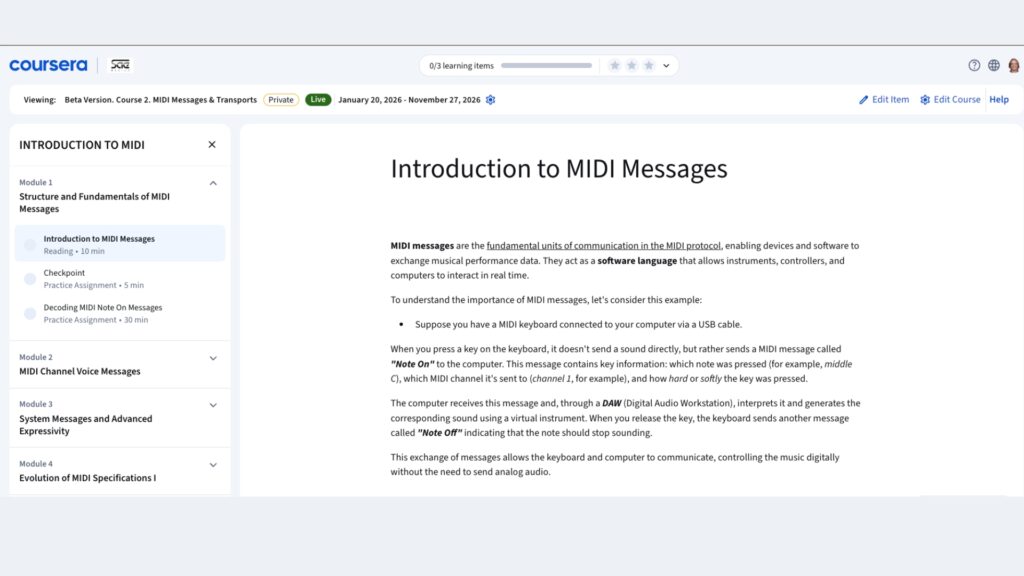
As part of May Is MIDI Month 2026, The MIDI Association presented a MIDI In Music Education webinar focused on expanding access to music technology learning for students, teachers, schools, and the broader music products industry.
The related MIDI.org article emphasized that MIDI can help make music technology education more approachable, more affordable, and more practical. MIDI is already embedded in the tools students use every day, from keyboards and controllers to DAWs, mobile apps, notation programs, and online music platforms.
For educators, MIDI provides a bridge between traditional music learning and modern production. For students, it opens the door to composition, arranging, recording, remixing, performance, and creative exploration. For the music products industry, education remains one of the most important ways to introduce the next generation to the power of MIDI.
The Music Accessibility Webinar Highlighted Inclusive Music Creation
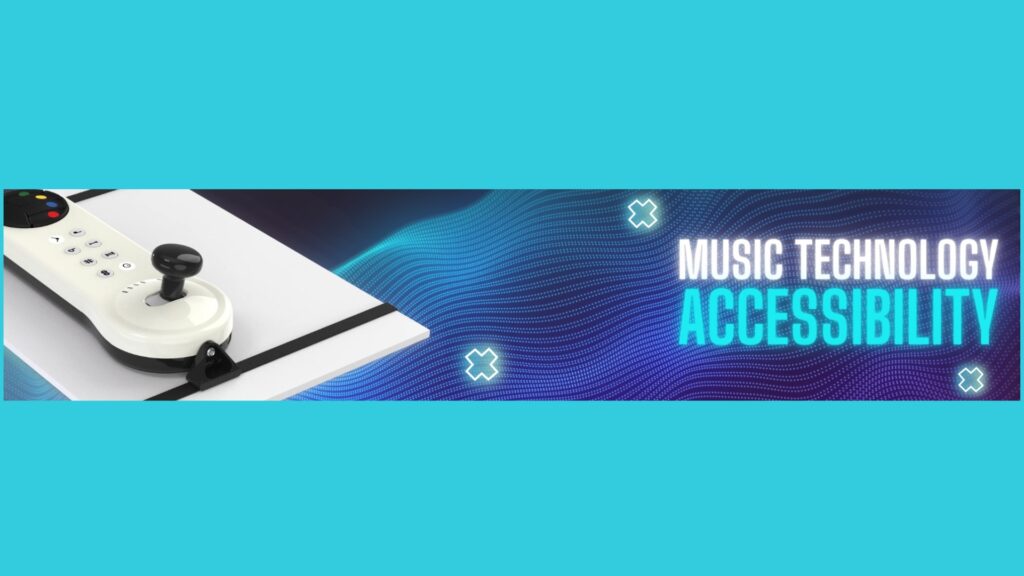
The 2026 Music Accessibility Webinar brought together The MIDI Association’s Music Accessibility Special Interest Group and the broader May Is MIDI Month community to focus on making music creation more accessible for disabled musicians, producers, students, educators, technologists, and developers.
The article connected accessibility directly to The MIDI Association’s mission. MIDI makes it possible to separate musical intent from any single physical interface. That means musical expression can come from a keyboard, adaptive controller, switch, touch surface, motion sensor, eye tracking system, voice input, or an entirely new interface designed around the needs of the performer.
This is one of the most important reasons MIDI continues to matter. MIDI is not just a way for instruments and computers to communicate. It is a way to create flexible, adaptable, and inclusive systems that allow more people to participate in music making.
The MIDI Association Joined Microsoft Ability Summit 2026
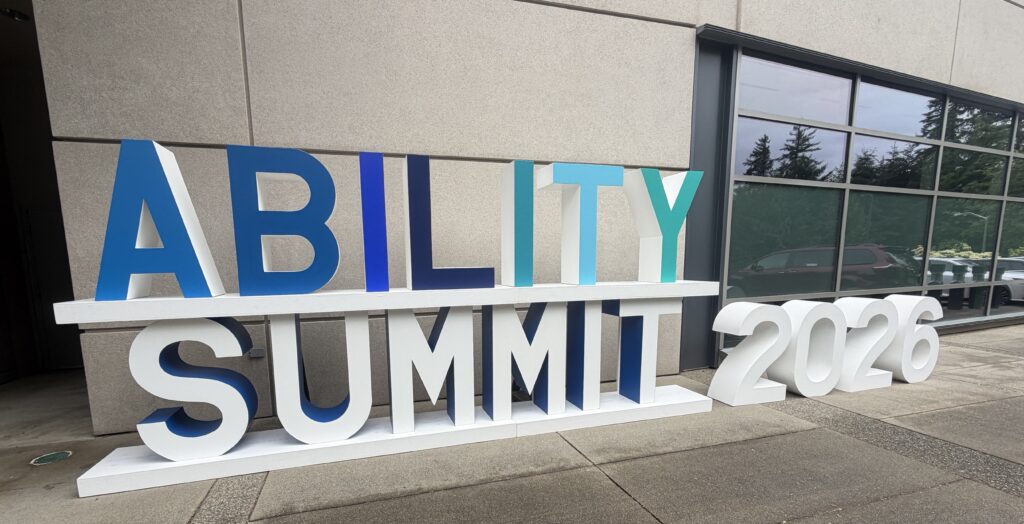
Another May 2026 article covered The MIDI Association’s participation in Microsoft Ability Summit 2026. The event brought together accessibility professionals, technology companies, educators, researchers, assistive technology developers, and disabled creators from around the world.
For The MIDI Association, events like Microsoft Ability Summit are important because accessibility is central to the future of music technology. As instruments, software, AI tools, and connected platforms evolve, the industry has an opportunity to design music creation systems that work for more people from the start.
The article reinforced the idea that music accessibility is not a side project. It is part of the future of MIDI, MIDI 2.0, music education, product design, and creative technology.
MIDI, AI, and Accessibility at Berklee’s AIMS: AI Music Summit
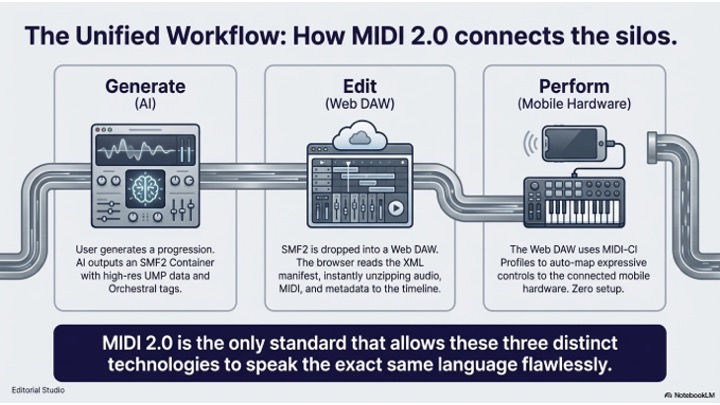
The article “The MIDI Association at Berklee’s AIMS: AI Music Summit” looked ahead to The MIDI Association’s participation in Berklee’s AIMS: AI Music Summit in Boston, June 3–5, 2026.
The article positioned MIDI as an important interoperability layer for AI-powered music technology. As AI music tools develop quickly, open standards are essential to help instruments, controllers, software, learning systems, accessibility tools, and AI platforms work together.
The MIDI Association’s AIMS demo booth was designed to give attendees a chance to learn about current MIDI initiatives, MIDI 2.0, music accessibility, education, interactive audio, and the role of interoperability in AI-assisted creative workflows.
The article also highlighted an accessibility-focused hackathon challenge asking how MIDI and AI can help remove barriers so more people can make music. That challenge reflects a larger theme across May 2026: the future of music technology should be musician-centered, interoperable, and inclusive.
Remembering Jack Hotop
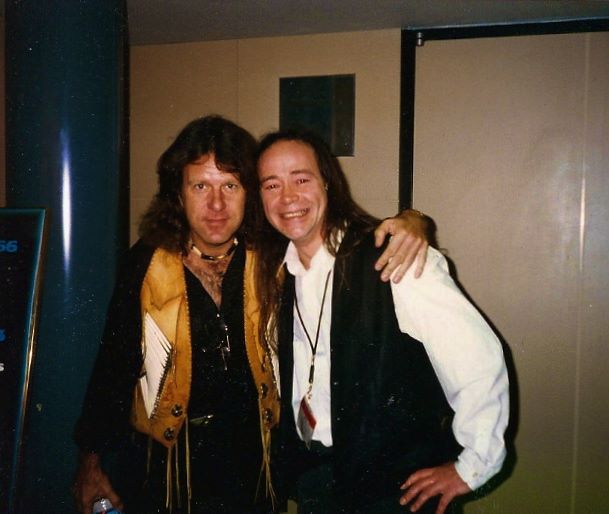
May 2026 also included a deeply personal MIDI.org article remembering Jack Hotop, the longtime KORG sound designer, programmer, demonstrator, musician, and creative force behind many of the most important KORG instruments of the MIDI era.
The article “Jack Hotop: MIDI Patch Boy” described Hotop as one of the key musical voices behind generations of KORG synthesizers and workstations, including the M1, Wavestation, 01/W, Trinity, Triton, KARMA, OASYS, M3, M50, KRONOS, and many others.
Jack approached technology as a musician first. His work helped define the sound of KORG instruments not just as products, but as expressive tools for composers, performers, producers, and keyboard players. His connection to the KORG M1 is especially significant for the MIDI community, because the M1 helped establish the modern MIDI workstation as a complete music creation environment.
The remembrance of Jack Hotop was also a reminder that MIDI history is made by people: musicians, engineers, sound designers, product planners, demonstrators, educators, and community builders who turn technical possibilities into creative realities.
A Month That Connected the Past, Present, and Future of MIDI
Taken together, the May 2026 MIDI.org posts showed a remarkably broad picture of The MIDI Association’s work.
- MIDI 2.0 is becoming practical through demonstrations, profiles, interoperability testing, and member collaboration.
- Music accessibility is becoming a central part of product design, education, events, and standards discussions.
- Music education remains one of the most important ways to expand access to creative technology.
- AI music tools need open standards so they can remain interoperable, expressive, and musician-centered.
- MIDI history continues to remind us that innovation is built by communities of people who care deeply about music.
May Is MIDI Month 2026 showed that MIDI continues to evolve while staying true to its original purpose: helping people make music by allowing instruments, computers, software, controllers, and creative tools to communicate.
Remembering Dave Smith

As May comes to a close, we also remember Dave Smith, who passed away four years ago on May 31, 2022.
Dave Smith was one of the central figures in the creation of MIDI and one of the most important synthesizer designers in music technology history. His work with Sequential Circuits, his role in the development of the original MIDI specification, and his lifelong commitment to expressive electronic musical instruments helped shape the tools that millions of musicians continue to use today.
Four years after his passing, Dave’s influence is still present every time MIDI connects instruments, inspires new products, enables creative workflows, or helps someone make music in a new way.
May Is MIDI Month is a celebration of the future of music technology, but it is also a time to remember the people who made that future possible.
2026 May Is MIDI Month Platinum Sponsors