

The Metropolitan Museum of Art’s exhibition Musical Bodies explores a powerful idea: the human body is itself a musical instrument, and musical instruments often reflect the shape, movement, identity, and imagination of the people who play them.
For anyone interested in the future of music technology, one of the most striking objects in the exhibition is the PianoArc circular keyboard, sometimes called the Circle Piano or Piano Arc. It is both a performance controller and a sculptural object, and its presence at The Met places modern MIDI-based instrument design in direct conversation with 4,000 years of musical instrument history.


What Is Musical Bodies?

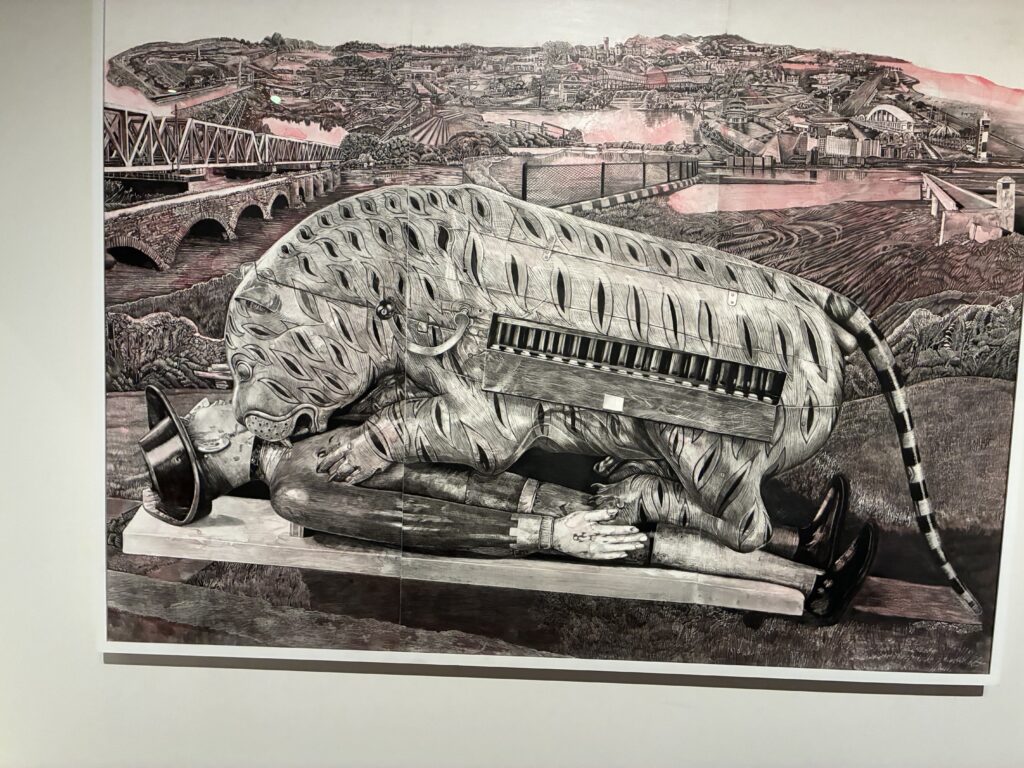
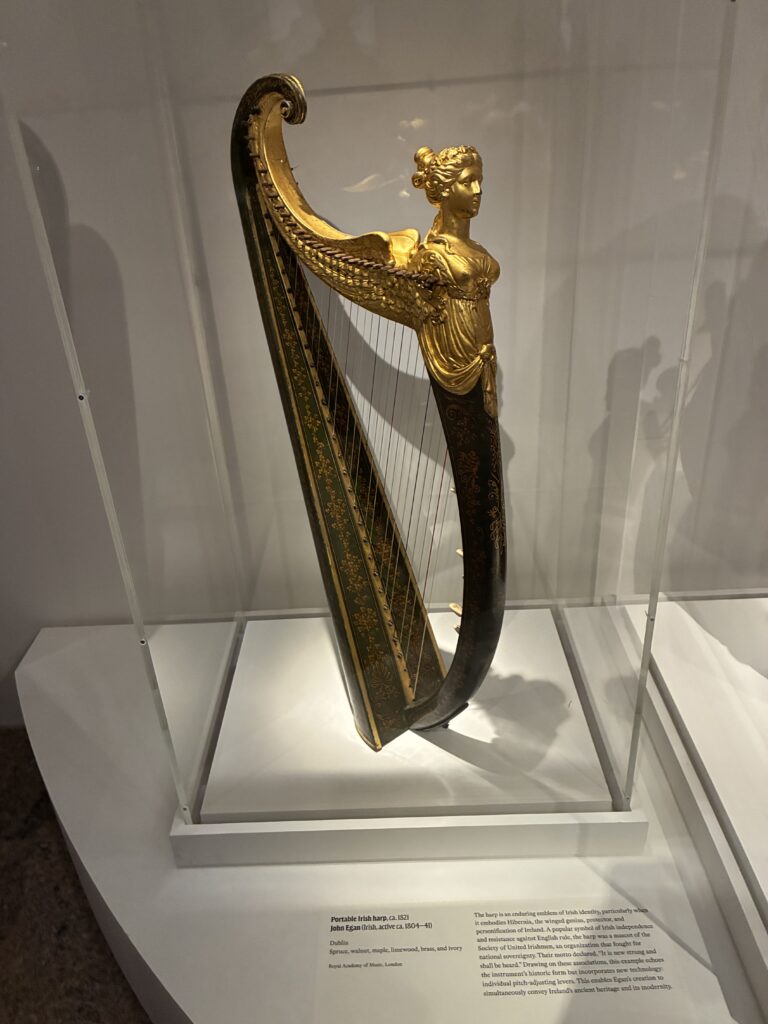
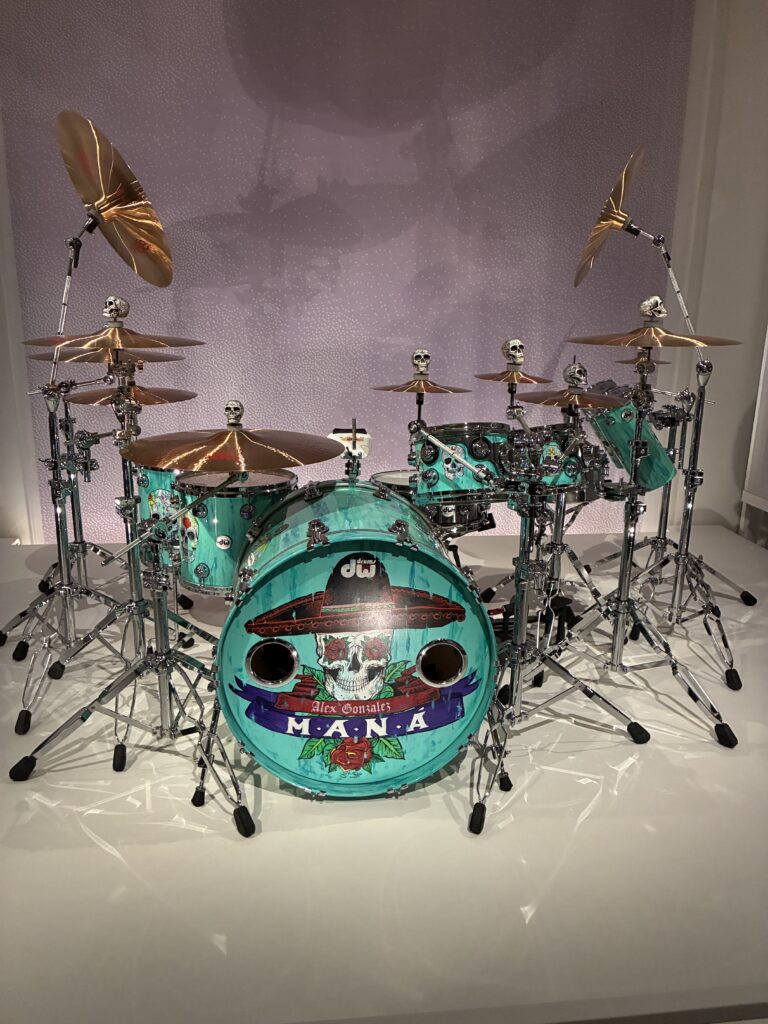
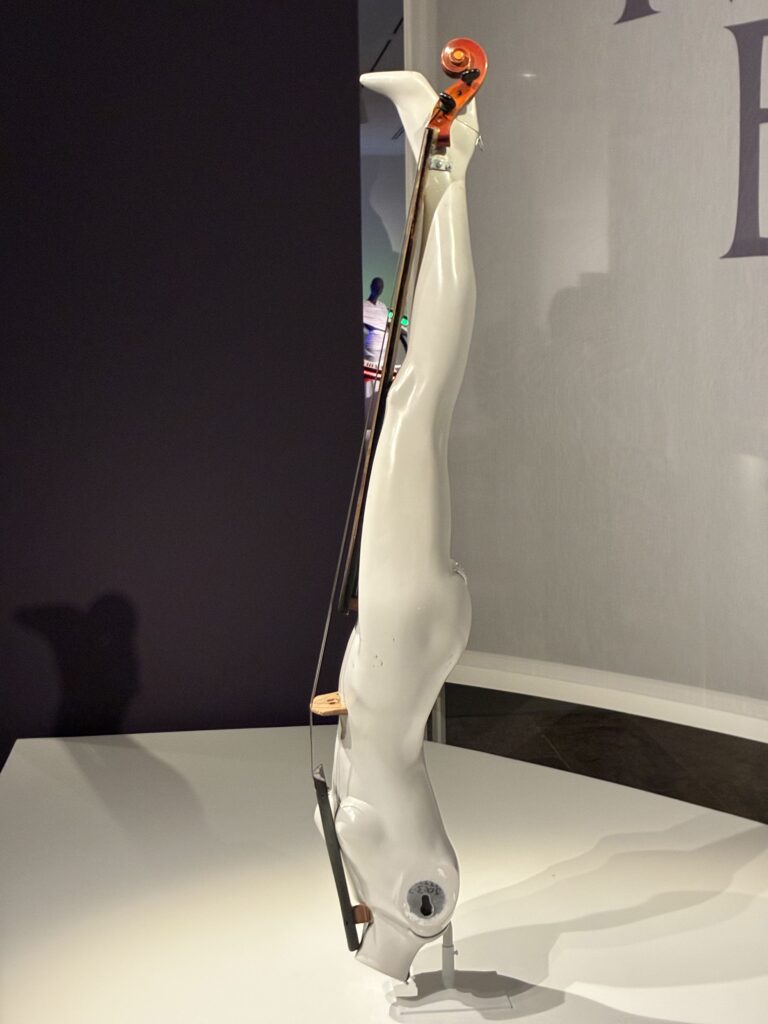
Musical Bodies is an exhibition at The Metropolitan Museum of Art in New York City that examines the relationship between musical instruments and the body. The exhibition brings together instruments, paintings, sculptures, drawings, and other works to show how music is connected to voice, gesture, identity, ritual, performance, and visual culture.
The exhibition includes works from The Met’s collection as well as loans from institutions and collectors around the world. It places ancient instruments, visual art, popular culture, and contemporary instrument design side by side, showing that musical instruments are never just tools for producing sound. They are also extensions of the body, expressions of culture, and objects of design.
That makes the PianoArc a natural fit. It challenges the familiar straight-line shape of the piano keyboard and turns it into a circular performance environment. The result is an instrument that changes not only how a keyboard looks, but also how a performer physically relates to it.
The PianoArc: A Keyboard Reimagined as a Circle
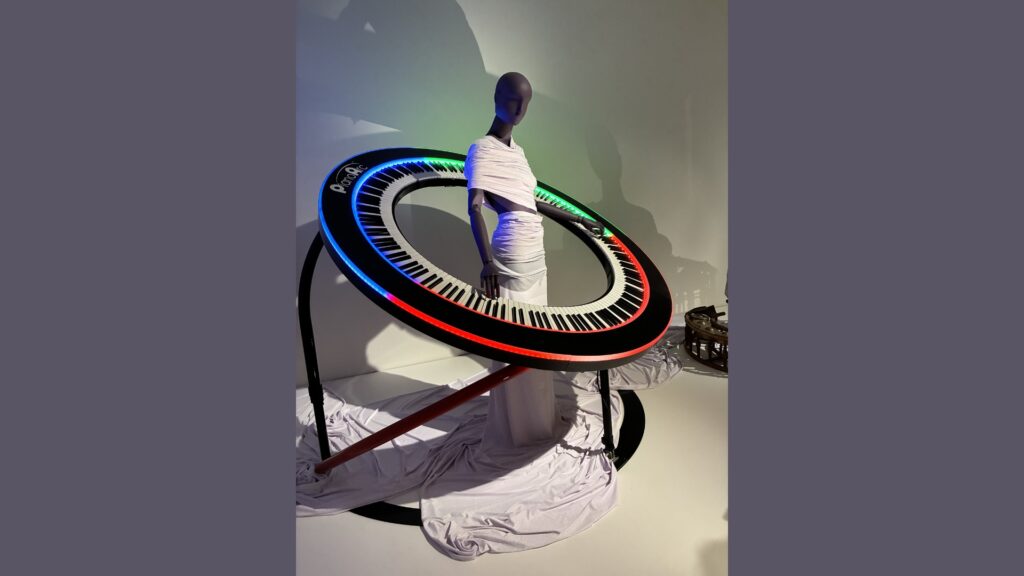
The PianoArc transforms the traditional keyboard into a circular controller. Instead of presenting keys in a straight horizontal line, the PianoArc wraps the keyboard around the performer. This changes the visual identity of the keyboardist on stage and makes the instrument feel more like a performance sculpture than a conventional keyboard stand.
The PianoArc was originally inspired by keyboardist Brockett Parsons’ desire to rethink the stage presence of the keyboard player. In many live performance settings, the keyboardist can appear hidden behind racks of equipment or placed to the side of the stage. The PianoArc reverses that relationship. It surrounds the player, puts the performer at the center, and turns keyboard performance into something more visibly physical and theatrical.
For The Met’s Musical Bodies exhibition, the PianoArc team developed a new circular instrument and support system. The latest design includes 288 radial keys arranged across three contiguous musical sections. One section spans 10 octaves, corresponding to the approximate range of human hearing, while two additional sections each span 7 octaves. Together, the instrument covers 24 octaves across 288 notes.
Why the Circle Matters
The familiar piano keyboard is one of the most influential interfaces in music history. It has shaped how generations of musicians understand pitch, harmony, melody, and musical space. Yet its physical form has remained largely unchanged: a straight row of keys organized from low to high.
The PianoArc keeps the recognizable logic of the keyboard but changes its geometry. The player still encounters black and white keys in a familiar pattern, but the instrument curves around the body. This creates a different relationship between musician and machine. The performer is no longer simply standing behind a keyboard. The performer is inside the instrument’s visual field.
That is exactly the kind of relationship that Musical Bodies invites visitors to consider. Instruments are not separate from the body. They are shaped by bodies, activated by bodies, and often designed to amplify what bodies can do. The PianoArc makes that relationship visible in a contemporary electronic instrument.
A MIDI Controller as a Museum Object
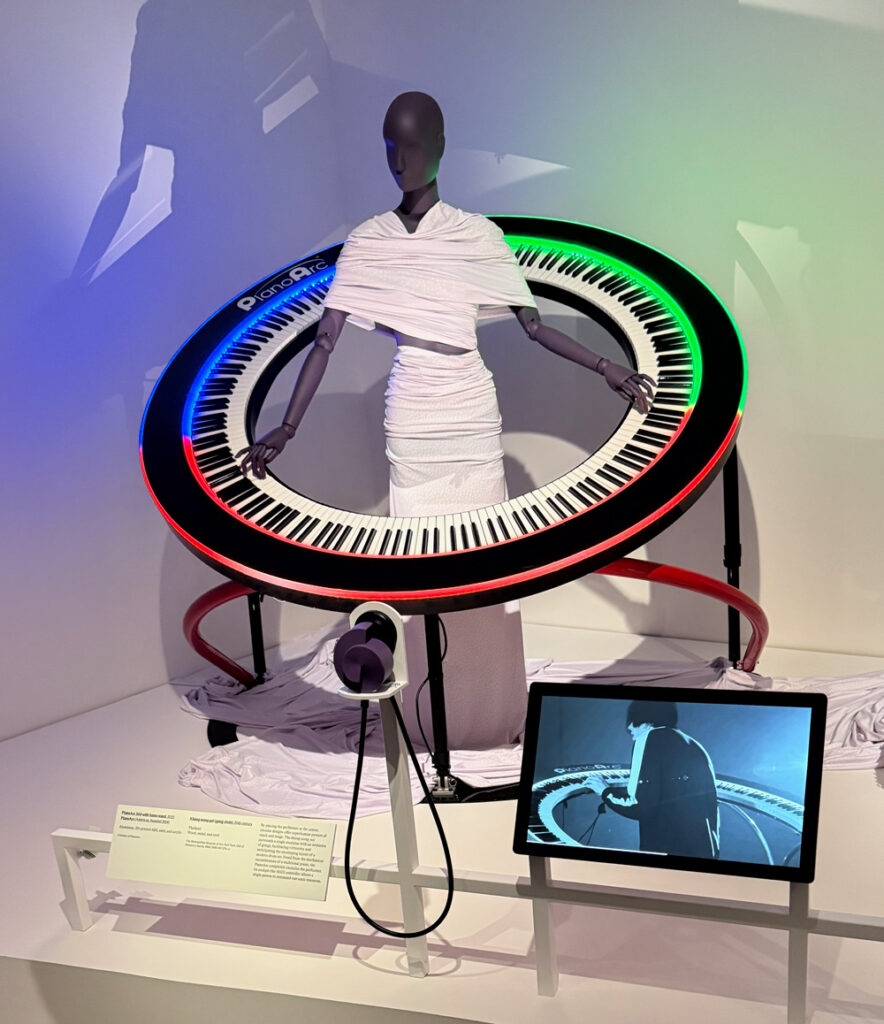
The PianoArc is also important because it shows how MIDI controllers can be understood as designed instruments, not just pieces of technology. MIDI has always separated the physical gesture from the sound source. A keyboard, pad controller, wind controller, drum controller, or other MIDI device can trigger sounds from synthesizers, computers, samplers, and software instruments. That flexibility allows instrument designers to rethink the body’s relationship to music making.
The PianoArc takes advantage of that freedom. Because the instrument is a controller, its shape does not have to follow the mechanical limitations of an acoustic piano. It can be circular, modular, illuminated, and customized for performance. The instrument demonstrates one of MIDI’s great strengths: it allows the interface for musical expression to evolve independently from the sound-generating system.
The current PianoArc design includes USB-C MIDI and MIDI 2.0-capable output. That points toward the future of expressive performance controllers, where instruments can provide richer communication between the performer, the controller, and the sound system. In that context, the PianoArc is not just visually dramatic. It is also part of a broader history of MIDI-enabled innovation.
From Performance Tool to Work of Art
Many electronic instruments live in a practical world of cables, stands, cases, and stage plots. The PianoArc certainly belongs to that world, but it also crosses into the world of sculpture and visual design. Its circular form makes it instantly recognizable. Its radial keys and illuminated arcs create a visual identity that is inseparable from the musical experience.
This is why its appearance at The Met is significant. The exhibition does not treat musical instruments only as sound-making devices. It presents them as cultural objects that carry meaning through their materials, forms, decorations, and relationships to performers. The PianoArc fits that frame perfectly. It is an instrument that asks viewers to think about what a keyboard can be, how a performer can inhabit an instrument, and how technology can reshape musical presence.
Connecting the Past and Future of Musical Interfaces
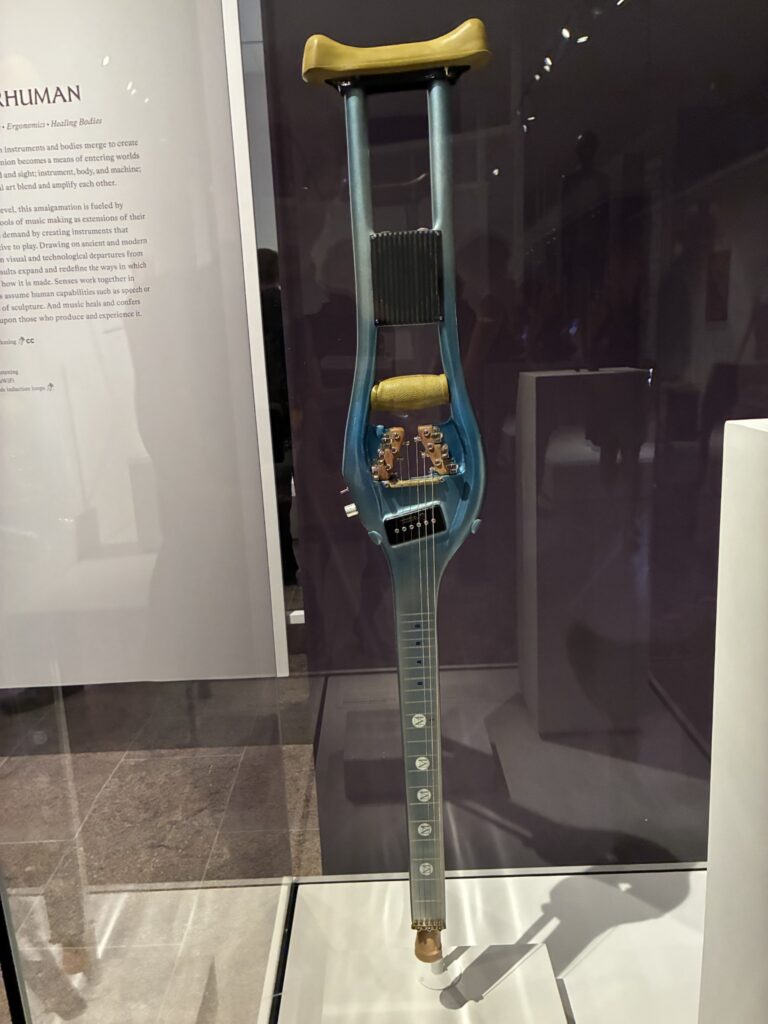
One of the most exciting aspects of Musical Bodies is that it places contemporary instruments alongside objects from deep musical history. This reminds us that instrument design has always been a human-centered activity. Across cultures and centuries, people have created instruments that fit the hands, the breath, the voice, the feet, the torso, and the imagination.
The PianoArc belongs to that same story. It is a modern electronic controller, but it addresses an ancient question: how should a musical instrument relate to the human body?
Its answer is bold. The keyboard does not need to be a straight line. The performer does not need to disappear behind the instrument. A controller can be playable, expressive, theatrical, and sculptural at the same time. MIDI technology makes that kind of experimentation possible because it allows designers to separate musical control from a single fixed instrument architecture.
Why This Matters to the MIDI Community
For the MIDI community, the PianoArc’s inclusion in Musical Bodies is a reminder that MIDI is not just a technical protocol. It is a platform for musical imagination. Since its introduction, MIDI has allowed musicians and manufacturers to create new kinds of instruments, new performance setups, and new ways of connecting human gesture to sound.
The PianoArc shows how far that idea can go. It uses the familiar language of the keyboard but expands it into a completely different physical and visual form. It demonstrates that the future of musical instruments will not only be about new sounds. It will also be about new shapes, new gestures, new performance practices, and new relationships between musicians and technology.
At The Met, the PianoArc stands among instruments and artworks that show how deeply music is connected to the body. For MIDI users, developers, manufacturers, educators, and performers, it is also a powerful example of what happens when digital control becomes an art form.
Visit and Learn More
Musical Bodies is on view at The Metropolitan Museum of Art, Fifth Avenue, in New York City through September 27, 2026.
Learn more about the exhibition at The Met:
https://www.metmuseum.org/exhibitions/musical-bodies
Learn more about the PianoArc circular keyboard:
https://pianoarc.com/brock360/