

As the MIDI community celebrates the 2026 NAMM Show, The MIDI Association proudly recognizes Emile Tobenfeld, better known to musicians around the world as “Dr. T,” with a MIDI Lifetime Achievement Award. Tobenfeld’s groundbreaking work in the 1980s and early 1990s profoundly shaped the creative possibilities of computer-based music making. Through Dr. T’s Music Software, he provided tools that were radically ahead of their time—sequencers, algorithmic composition systems, real-time performance environments, and editors that expanded how artists thought about composition and live interaction.
Youtube Summary Video
Born from Tobenfeld’s dual passions for experimental filmmaking and mathematics, Dr. T’s Music Software embodied a rare blend of artistic curiosity and technical ingenuity. At a moment when personal computers were just beginning to find their place in the studio, Tobenfeld envisioned a future where software didn’t just record notes—it helped musicians discover new ones.

This award honors both the remarkable career of Emile Tobenfeld and the legacy of Dr. T’s Music Software, a company whose influence continues to echo throughout modern composition environments, algorithmic tools, and performance systems.
The Birth of Dr. T’s Music Software
Dr. T’s Music Software emerged in the mid-1980s, during one of the most transformative moments in electronic music history. MIDI had just been introduced, the affordability of personal computers was improving, and a new generation of artists, DJs, composers, and experimenters were eager to explore what computer-assisted creativity could do.
Emile Tobenfeld—already known in avant-garde film circles as “Dr. T”—began writing music tools that reflected his interests in systems, patterns, improvisation, and structured chaos. Unlike many other developers who focused on traditional “tape recorder–style” sequencing, Tobenfeld envisioned software that acted as a kind of creative partner.
Dr. T’s Music Software was officially founded in 1984. What followed was one of the most productive and imaginative periods in early computer-music development, spanning platforms such as the Commodore 64, Amiga, Atari ST, and IBM PC compatibles.
KCS: A Radical Approach to MIDI Sequencing

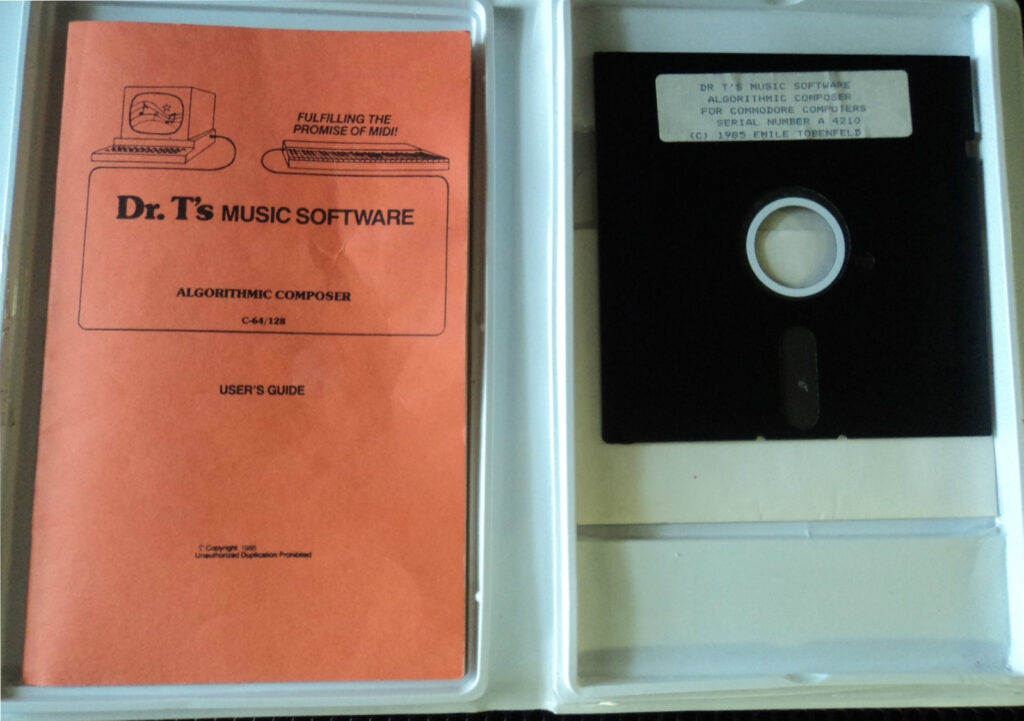
The flagship product, KCS (Keyboard Controlled Sequencer), first appeared on the Commodore 64 and later achieved legendary status on the Atari ST. Where many sequencers adopted a linear, tape-like paradigm, KCS broke from tradition by offering:
- Algorithmic and pattern-based sequencing capabilities,
- Multiple modes for composition, recording, and editing,
- Open, interactive environments for improvisation, and
- Macro scripting and transform functions for deep manipulation of MIDI data.

KCS was deeply flexible—sometimes even daunting for new users—but for power users it became an instrument in its own right. Musicians could reshape phrases using algorithmic rules, trigger sequences in real time, recombine patterns on the fly, and build generative structures far beyond the capabilities of most contemporary systems.
For many artists, KCS was the first sequencer that felt like an improvising partner, not simply a digital tape machine. It attracted electronic composers, film scorers, academic researchers, avant-garde performers, and emerging techno producers. Even today, KCS maintains a dedicated following, and modern descendants and recreations continue to appear, inspired by Tobenfeld’s original design.
The Multi Program Environment (MPE): A Modular Software Studio
One of Tobenfeld’s most visionary achievements was the MPE (Multi Program Environment), a framework that allowed musicians to run multiple Dr. T programs simultaneously and have them communicate with one another.
Yep, that’s right there was MPE back in 1988, 40 years before MIDI Polyphonic Expression.
At a time when memory was limited and multitasking on personal computers was rare, MPE enabled:
- Real-time communication between sequencers, editors, and algorithmic tools,
- Modular workflows where users could combine different programs in custom ways,
- Interactive performance setups spanning multiple applications, and
- Personalized software “rigs” that mirrored the modularity of a physical studio.
In many ways, MPE was an early precursor to the modular DAW and plug-in host paradigms that would emerge years later. It allowed musicians to build their own creative environments, combining tools like KCS, Tunesmith, editor/librarians, and specialized controllers into unique systems tailored to their artistic goals.
Tunesmith: Algorithmic Composition for Everyday Musicians
Perhaps no Dr. T program better represents Tobenfeld’s artistic identity than Tunesmith, an algorithmic composition system that brought procedural and generative approaches to melody, harmony, and rhythm into an accessible tool.

With Tunesmith, musicians could:
- Generate motifs and patterns from rule-based systems,
- Mutate and evolve existing material,
- Create recursive and layered structures, and
- Explore stochastic (chance-based) processes within controlled frameworks.
Long before environments like Max/MSP, SuperCollider, or modern generative plug-ins, Tunesmith gave artists a practical way to explore algorithmic composition. It found a home with:
- Academic researchers studying computational creativity,
- Electronic and ambient composers seeking evolving textures,
- Film and TV composers looking for variation and complexity, and
- Experimental musicians interested in systems-based improvisation.
The influence of Tunesmith can still be felt today in the growing ecosystem of generative music tools and AI-assisted composition platforms.
Editor/Librarians and Hardware Integration
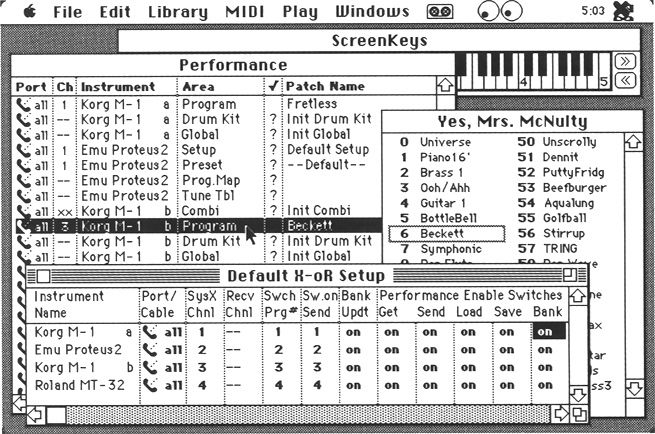
While creativity and experimentation were at the heart of Dr. T’s, the company also produced some of the era’s most capable editor/librarians for popular synthesizers from Roland, Yamaha, Korg, Ensoniq, and others.
These tools allowed musicians to:
- Edit patches via graphical interfaces,
- Store, organize, and catalog sounds,
- Access deep synthesis parameters that were difficult to reach from front panels, and
- Integrate sound design into their sequencing and performance workflows.
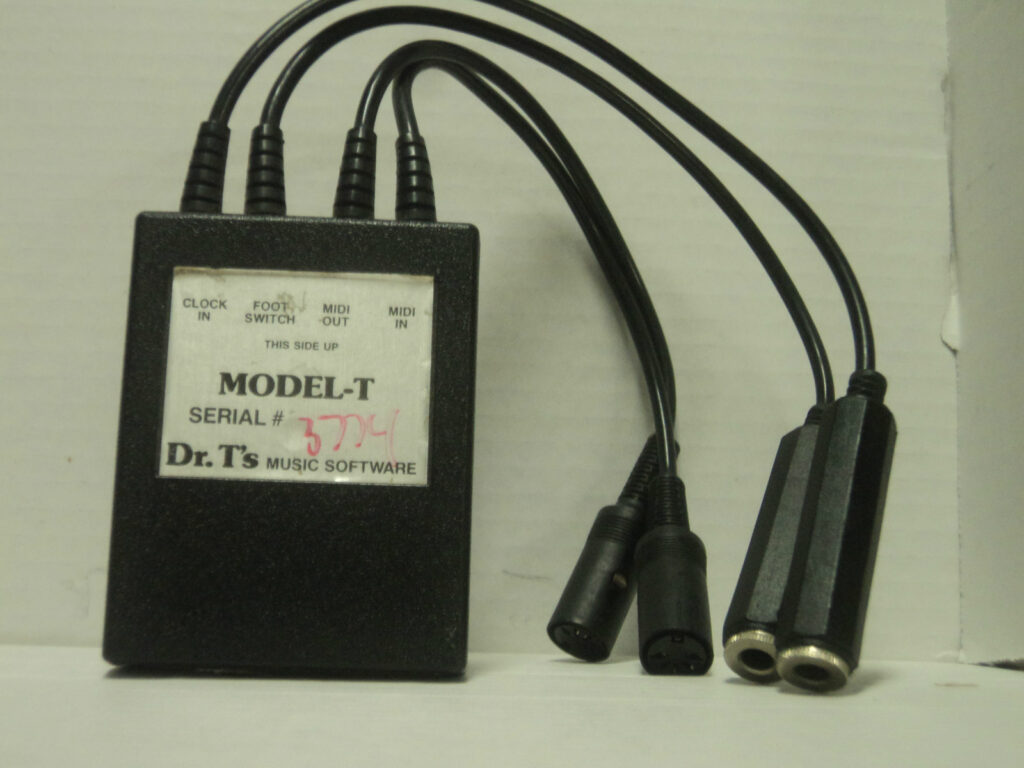
By bridging advanced hardware editing with modular sequencing and algorithmic systems, Dr. T’s Music Software helped musicians treat their entire studio—synths, modules, and computer—as one interconnected creative instrument.
The End of an Era and Lasting Influence
By the early 1990s, competition in the music software world intensified. Companies such as Steinberg, Emagic, and Opcode offered increasingly polished graphical environments and, crucially, integrated digital audio recording. The Atari ST market—one of Dr. T’s strongest platforms—declined rapidly, and the transition to Macintosh and Windows required significant new investment.
By the mid-1990s, Dr. T’s Music Software gradually wound down active development, closing a remarkable chapter in the history of MIDI software. Yet the ideas Tobenfeld championed—modularity, generative composition, algorithmic transformation, and real-time interactive systems—continued to spread.
The spirit of Dr. T’s can be seen in today’s DAWs, modular environments, live performance tools, and generative plug-ins. Many artists who cut their teeth on KCS, Tunesmith, and the MPE carried those concepts forward into new systems and genres.
Emile Tobenfeld Today
After stepping away from commercial software development, Emile Tobenfeld returned to his primary artistic passion: photography and experimental video performance. Under the name Dr. T, he continues to work as a visual artist, creating improvised, real-time imagery in collaboration with musicians—a kind of visual “live coding” that echoes the structure, chance, and transformation central to his MIDI tools.
Though he is no longer writing sequencers or algorithmic composition programs, the conceptual frameworks he helped establish continue to influence:
- Academic research in algorithmic and generative music,
- Modern DAWs that support clip-based and non-linear workflows,
- Modular performance systems used by live electronic artists, and
- AI-assisted creativity tools that blur the line between human intention and machine suggestion.
A Legacy Worth Celebrating
Emile “Dr. T” Tobenfeld is one of the rare figures in music technology whose work bridged art and engineering, structure and spontaneity, human creativity and algorithmic possibility. His software invited musicians to think differently—not just about sequencing, but about the nature of musical ideas themselves.
The MIDI Association is proud to present him with the 2026 MIDI Lifetime Achievement Award, honoring:
- his pioneering role in early computer-based composition,
- his leadership in algorithmic and generative tools,
- his visionary design of modular creative environments, and
- his lasting impact on musicians, technologists, and artists around the world.
Dr. T’s Music Software may have been born in the earliest days of MIDI, but its spirit—experimental, playful, inventive, and open-ended—remains profoundly relevant today.
We celebrate Emile Tobenfeld for helping shape the culture, creativity, and technology of modern music.