

From June 3–5, 2026, Berklee College of Music hosted AIMS: AI Music Summit on its Boston campus, bringing together musicians, educators, researchers, technologists, legal experts and industry leaders to explore one of the most important questions facing music today: how will artificial intelligence change the way music is created, produced, performed, taught, licensed and experienced?
Hosted by the Berklee Emerging Artistic Technology Lab, known as BEATL, AIMS was designed as an artist-centered event rather than a technology-first conference. The summit focused on practical creative workflows, real-world artist impact, rights and ethics, and the ways AI is already becoming part of daily music practice in studios, classrooms, live performances and online content creation.
An Artist-First Conversation About AI
Berklee positioned AIMS as a forum where musicians could be active participants in shaping new technologies, not simply users responding after the fact. That distinction is especially important for the music community. AI systems are already influencing songwriting, production, sound design, mixing, mastering, voice modeling, instrument simulation, music education, rights management and content distribution. AIMS created a space for artists and industry leaders to examine those changes together.
The summit’s focus areas included creative workflows, audio and production technology, voice and instrument systems, education and creative practice, ethics and intellectual property rights, and the economic impact of AI on artists and the music industry. Those topics reflect the reality that AI in music is not a single tool or trend. It is a broad set of technologies that touches almost every stage of the creative and commercial process.
Keynotes, Performances and Real-World Demonstrations
AIMS featured keynote speakers, panels, applied workshops, research presentations, live demonstrations, performances and showcases. The event opened with a welcome reception on June 3, followed by two full days of programming on June 4 and June 5.
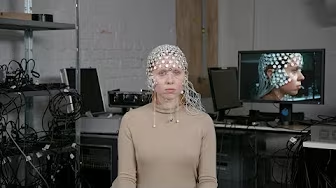
One of the featured keynote speakers was Holly Herndon, an artist widely recognized for her pioneering work at the intersection of music, machine learning, voice, authorship and consent. Her work has helped define some of the most important artistic and ethical questions around AI-generated media: Who owns a voice? How should artists control the use of their work in training data? What does authorship mean when models become part of the creative process?

The summit also included a keynote by Dr. Martin Clancy, founder of AI:OK, examining ethics and how AI is reshaping the definition of musicianship. That question is central to music education and to the future of music technology. If AI tools can generate, transform or assist musical material, then musicians, teachers and standards organizations must help define how those tools support human creativity rather than replace it.
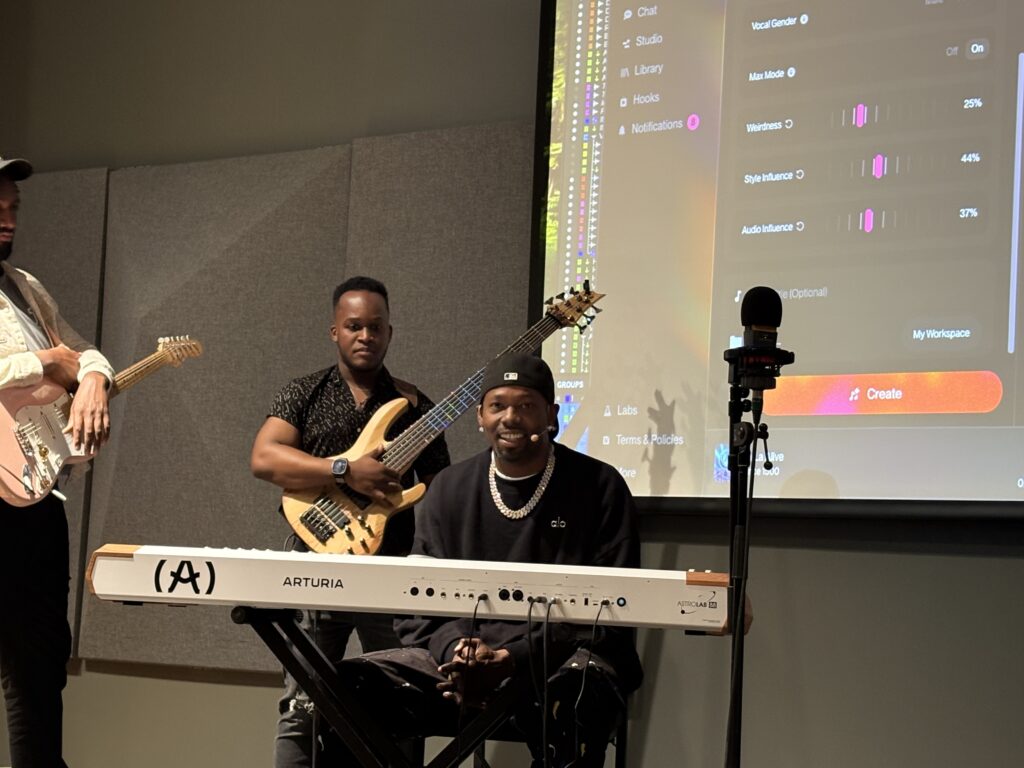
In addition to talks and panels, AIMS included live and applied demonstrations. Grammy-winning producer Rance presented a live songwriting session using AI as part of the creative process.
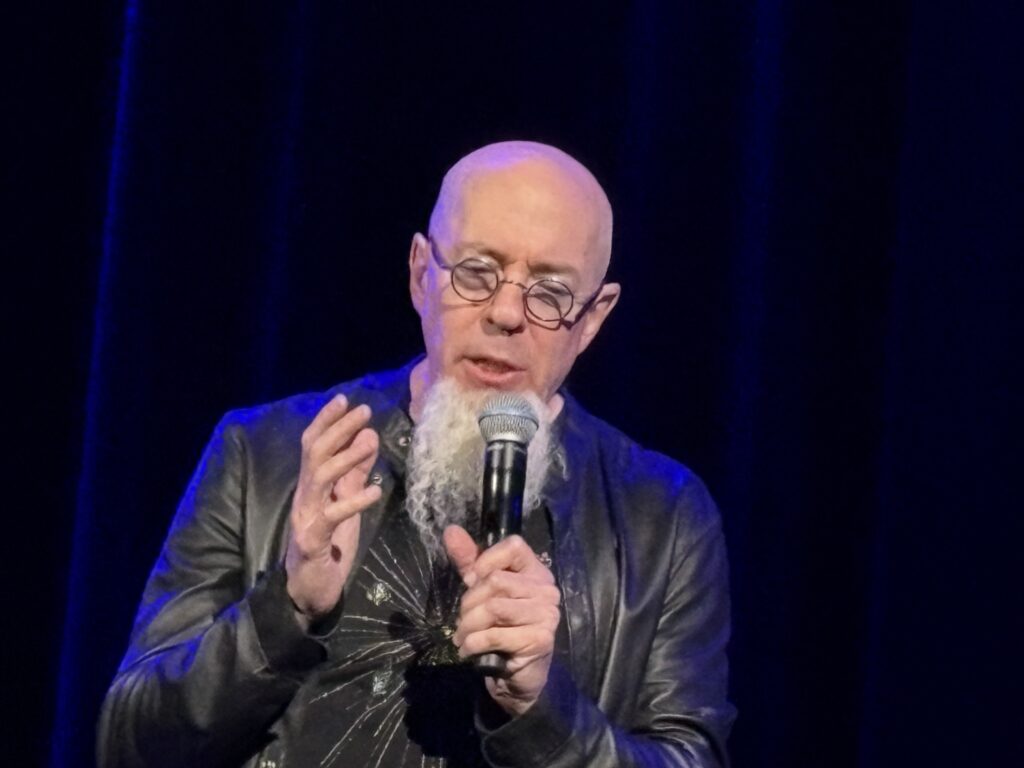
The summit also featured a June 4 concert at the Berklee Performance Center with performances by Jordan Rudess and L’Rain highlighting how artists are exploring new musical possibilities through technology.
Industry Leaders and Music Technology Companies Join the Discussion
AIMS brought together a wide range of companies and organizations working at the intersection of music, media and emerging technology, including Adobe, Google, MIT Media Lab, Splice, Ableton, Suno, Sony AI, Warner Music Group, iZotope, Native Instruments, Moises, ElevenLabs, Universal Audio, The MIDI Association and others.
The presence of these companies is significant because AI music is not developing in isolation. It is being shaped by creators, software companies, rights holders, streaming platforms, educators, researchers and standards organizations. The tools that emerge from this moment will affect how musicians compose, how producers work, how students learn, how artists are paid, and how creative rights are protected.
Education, Ethics and Rights at the Center
For Berklee, the summit also reflected a larger institutional commitment to helping students and artists understand emerging technology. BEATL was created as a student-centered, career-focused innovation lab focused on music creation and creative technology, including next-generation creator tools, AI and machine learning, immersive experiences and new interfaces for music creation.
That education-focused approach is critical. The next generation of musicians will need to understand not only how to use AI tools, but also how to evaluate them. They will need to ask what data was used, whether artists gave consent, how rights are managed, how bias or limitations may affect results, and how human musical intent remains at the center of the process.
AIMS also connected directly to questions of attribution, licensing and artist compensation. Legal and industry voices, including representatives from Warner Music Group and Granderson Des Rochers, were part of the summit’s broader discussion about the frameworks that will be needed as AI becomes more deeply embedded in music creation and distribution.
Why AIMS Matters to the MIDI Community
For the MIDI community, the AI Music Summit is especially relevant because AI music systems will increasingly need structured, expressive and interoperable musical data. MIDI has always provided a common language for musical performance, composition and control. As AI tools become part of creative workflows, the need for reliable ways to represent musical intent, performance nuance, timing, control, articulation and interaction becomes even more important.
MIDI 2.0, MIDI-CI, Profiles, Property Exchange and new approaches to musical data interoperability can all play an important role in making AI-assisted music tools more useful, more transparent and more musician-centered. AI systems may generate audio, suggest musical ideas, assist with production, or respond to performers in real time, but they still need meaningful ways to communicate with instruments, DAWs, controllers, notation systems, educational tools and creative software.
https://midi.org/the-midi-association-at-berklees-aims-ai-music-summit
Events like AIMS are valuable because they bring together the communities that need to collaborate: artists, educators, researchers, software developers, rights experts and standards organizations. The future of AI in music will not be defined by technology alone. It will be shaped by the values, workflows and creative needs of musicians.
A Hands-On Hackathon Followed the Summit
Following the conference, Berklee hosted a June 6–7 hackathon in partnership with Music Hackspace. The hackathon was designed as a practical, hands-on extension of the summit, giving participants the chance to work on challenges from industry partners. Berklee emphasized that teams would retain full ownership of their intellectual property and that no coding experience was required.
The MIDI Association sponsored an Accessibility challenge hoping that the Hackathon would inspire participants to create a hack for Music Accessibility.
That hands-on component is an important part of the AIMS concept. The future of AI and music will not be solved only in keynote speeches or panel discussions. It will also be shaped through experiments, prototypes, demos, student projects and collaborations between people with different skills and perspectives.
AI, Video and the Changing Music Career
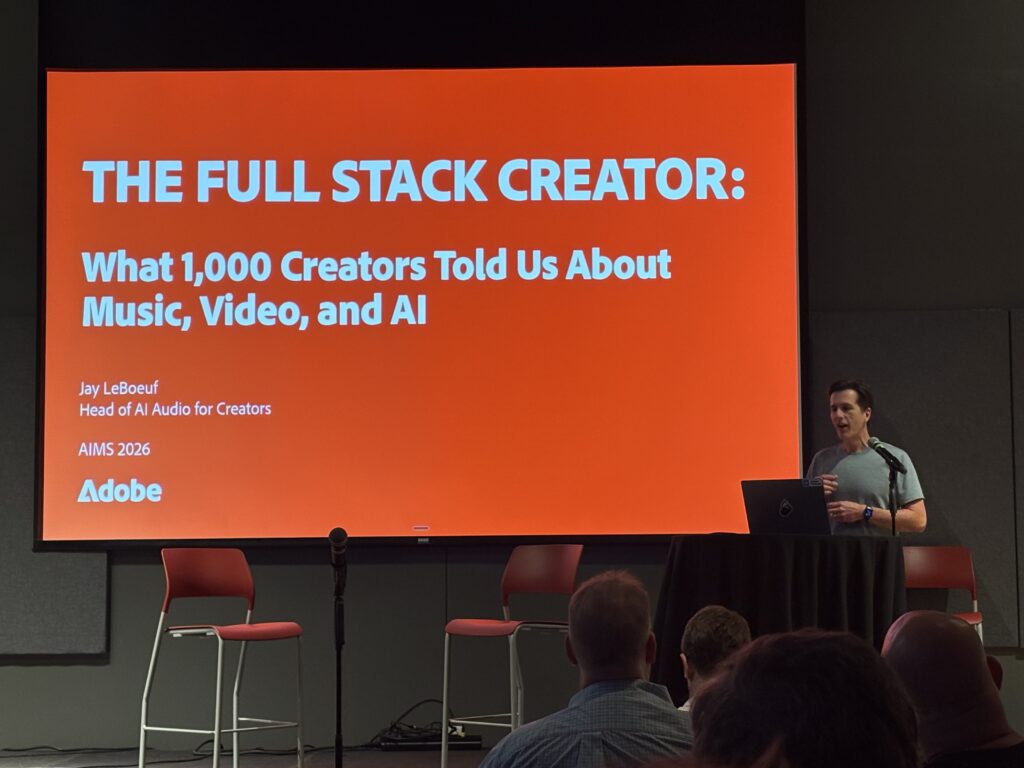
In conjunction with AIMS, BEATL also released research on how video has become essential to music careers and how AI is beginning to affect that landscape. The study found that many creators feel increasing pressure to produce video alongside their music, while also navigating licensing, rights-management and monetization challenges.
That context is important because the future of AI music is not just about song generation. It is about the entire creative economy around music: short-form video, social media, sync, education, production tools, fan engagement, attribution and new business models. For musicians, AI is arriving at the same time that the demands of being a creator are expanding rapidly.
A Timely Summit for a Rapidly Changing Field
Berklee’s AIMS: AI Music Summit arrived at a moment when musicians, educators and technology companies are all trying to understand what AI will mean for the future of creative work. The summit’s most important contribution may be its insistence that musicians remain at the center of the conversation.
AI will continue to change music creation, production, performance and learning. The challenge is to ensure that these tools expand human creativity, respect artists’ rights, support sustainable careers and integrate with the musical technologies that creators already use.
For The MIDI Association and the broader MIDI community, AIMS is a reminder that the future of music technology depends on collaboration. Open standards, artist-centered design, ethical frameworks and practical interoperability will all be essential as music enters the next era of intelligent creative tools.
We will be digging into details of many of the MIDI centric AI tools available like Ace Studio, BandM8 and the amazing set of MIDI tools released literally during the show by Google.
https://magenta.withgoogle.com/magenta-realtime-2
Learn more about AIMS: AI Music Summit at Berklee:
https://www.accelevents.com/e/berklee-college-of-music-event#agenda