
The Audio Engineering Society’s inaugural Accessibility in Audio Summit demonstrated just how quickly accessibility is becoming one of the most important conversations in professional audio.
Held online on July 9-10, 2026, the two-day event brought together engineers, developers, educators, manufacturers, artists, researchers, and accessibility advocates to explore practical solutions for making every aspect of audio production more inclusive.
For members of The MIDI Association’s Music Accessibility Special Interest Group (MASSIG), the summit represented something even more significant: a clear demonstration that accessibility is no longer a niche topic. It is becoming a core design principle across the professional audio industry.
MASSIG Members Help Lead the Conversation
The MIDI Association was well represented throughout the summit, with numerous MASSIG members serving as keynote speakers, panelists, presenters, moderators, and technology developers. Their participation reflected the collaborative approach that has made MASSIG one of the leading industry forums for advancing accessible music technology.
Among the MASSIG participants were representatives from:
- RAMPD (Recording Artists and Music Professionals with Disabilities)
- Ableton
- Audio Modeling
- Caedence
- Audio Accessibility Alliance
- Independent accessibility consultants and educators
- Researchers working on accessible musical interfaces
The breadth of participation illustrates an important trend: accessibility is increasingly being viewed as a shared responsibility across manufacturers, software developers, educators, standards organizations, and musicians themselves.
RAMPD Opens the Summit
The summit opened with an inspiring keynote moderated by Lachi, CEO of RAMPD. The discussion focused on Disability Culture and the creative contributions that musicians and audio professionals with disabilities continue to make across the industry.
Rather than focusing solely on accommodations, the keynote emphasized how accessibility creates opportunities for innovation, creativity, and broader participation throughout the music industry.
Lachi releases new album focused on accessibility

Lachi, CEO of RAMPD just released a new album the other day.
Magnificent is an invitation. Blending pop, dance, hip hop, and global rhythms, these 10 songs celebrate the countless ways we think, communicate, learn, and move through the world.
It’s already award nominated, spinning on FM/SXM radio, and hitting editorial playlists on Spotify and Apple.
Lachi teamed up with CEL’s The Nora Project to create a curriculum around Magnificent! These lessons pair with the music and invites you to a joyful celebration of disability, difference, and pride; recognizing that every voice and every way of being is something to celebrate.
Use it in your classroom, or share the link with any educators you know!
Accessibility Is Becoming a Design Requirement
One of the summit’s strongest themes was that accessibility should no longer be treated as an afterthought or an optional feature added late in the development process. Instead, accessibility should be considered from the earliest stages of product design.
That philosophy closely mirrors the work being undertaken within MASSIG, where manufacturers, developers, educators, accessibility specialists, and musicians collaborate to identify barriers before products reach users.
Throughout the summit, presenters demonstrated how inclusive design frequently improves products for everyone—not just musicians with disabilities. Better navigation, clearer interfaces, customizable workflows, richer metadata, improved keyboard control, and flexible interaction models benefit all users.
Accessibility is not simply about removing barriers—it is about creating better products for every musician.
Jason Dasent Highlights Accessible Music Software
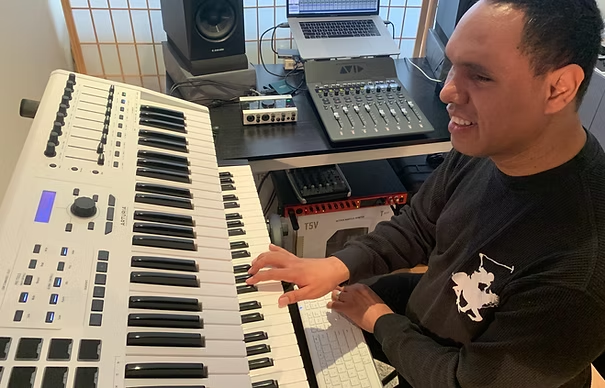
MASSIG member Jason Dasent joined Audio Modeling’s accessibility panel discussing the challenges and opportunities involved in developing professional music software that is fully usable by visually impaired musicians.
Drawing upon decades of professional production experience alongside his ongoing doctoral research, Dasent demonstrated how accessibility succeeds when developers work directly with musicians who rely on assistive technologies every day.
The panel featured experts from Audio Modeling, Ableton, the University of Milan, and Caedence, highlighting how accessibility has become an active area of research and product development across the industry.
From Recording Studios to Live Sound
The summit explored accessibility across virtually every area of professional audio, including:
- Music production software
- Recording studio design
- Live sound engineering
- Accessible mixing consoles
- Digital Audio Workstations
- Workplace inclusion
- Recording Academy accessibility guidelines
- Education and career development
One of our newest MIDI Association members, Softube, was showing off the very accessible Console 1.
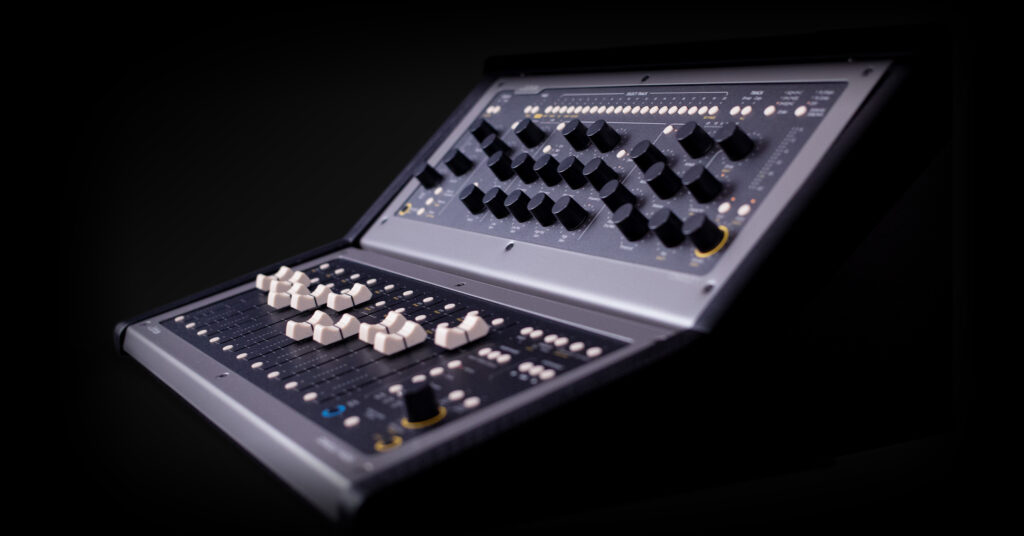
Sessions demonstrated that accessibility challenges extend well beyond software interfaces. Physical studio layouts, hardware controls, documentation, employment practices, and educational opportunities all play an important role in creating an inclusive industry.
Why This Matters for MIDI
The MIDI Association’s MASSIG has spent the past two years bringing together companies, educators, accessibility experts, and musicians to explore how MIDI technologies can make music creation more accessible.
Current MASSIG initiatives include work on accessible controllers, assistive text for MIDI-CI, improved interoperability between assistive technologies and music software, educational outreach, and stronger collaboration with organizations including RAMPD, the Foundation for Accessible Music, Audio Modeling, Ableton, Arcana Instruments, and many others.
The conversations taking place within AES strongly reinforce MASSIG’s mission. Standards organizations, manufacturers, educators, and accessibility advocates all recognize that solving accessibility challenges requires industry-wide collaboration rather than isolated efforts.
The Road Ahead
Perhaps the most encouraging outcome of the summit was the sense that accessibility has moved from being a specialist topic to becoming an integral part of modern product development.
As more manufacturers embrace inclusive design principles and collaborate directly with disabled musicians, future generations of music technology will become more flexible, more innovative, and more welcoming to everyone.
The MIDI Association congratulates the Audio Engineering Society, the AES Accessibility Committee, and all of the presenters who contributed to an outstanding inaugural summit. We are especially proud of the many MASSIG members who continue to lead the industry toward a future where music technology truly is accessible to all.
Learn More
- AES Accessibility in Audio Summit
- The MIDI Association Music Accessibility Special Interest Group (MASSIG)
- RAMPD (Recording Artists and Music Professionals with Disabilities)
- Audio Accessibility Alliance
- Foundation for Accessible Music