

Accessibility in music technology moves fastest when the people building it are also the people using it. That’s the idea behind Sound Without Sight, a community hub for blind and partially sighted musicians, audio engineers, and industry professionals, hosted by the Technology Association of Visually Impaired People (TAVIP). Its members — many of whom have also contributed directly to the MIDI Association’s own accessibility work — write and share guides, event recaps, and practical advice drawn from real performance and production experience.
We’re rounding up four recent pieces from the Sound Without Sight knowledge hub that speak directly to musicians, developers, and manufacturers working on accessible instrument design.
Roland V-STAGE Performance Keyboard Accessibility Guide
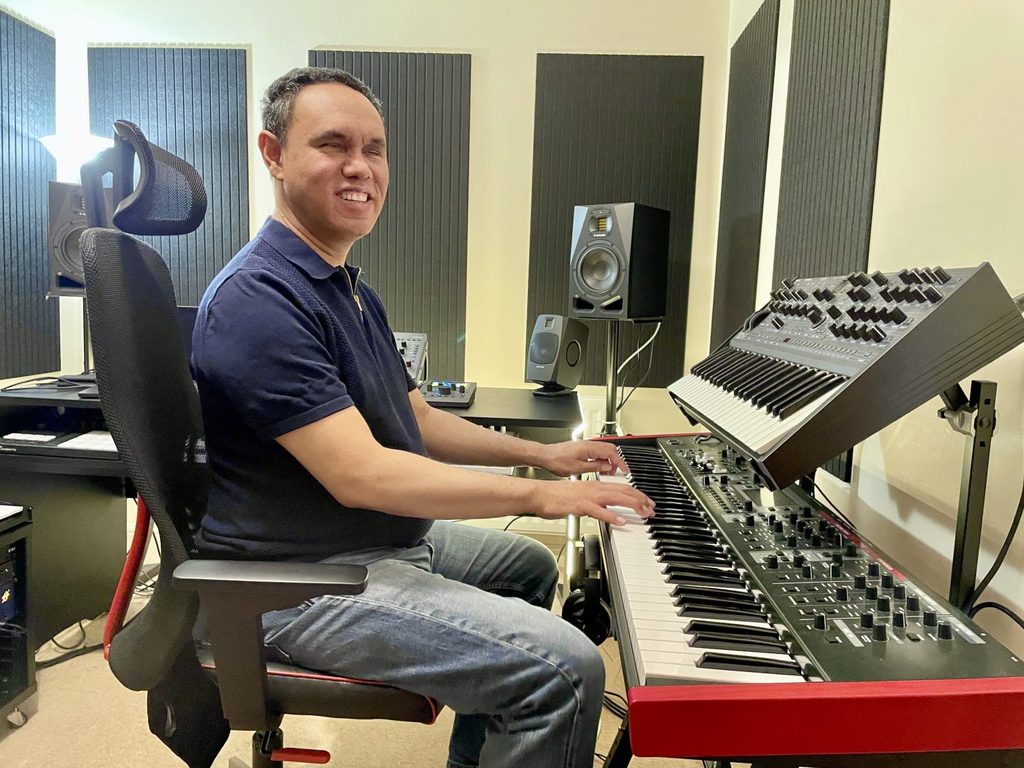
Roland has released a set of accessibility resources for its V-STAGE performance keyboard, developed in collaboration with accessibility consultant Jason Dasent through the Roland Future Design Lab. The materials — screen-reader-friendly written guides, audio guides, and instructional videos — give blind and partially sighted keyboardists multiple ways to learn the instrument on their own terms. Author Jay Pocknell walks through what’s available and why the multi-format approach matters for a community that doesn’t have one single “right” way to access information.
Introduction to ReaKontrol – A REAPER Extension for Native Instruments Kontrol Keyboards
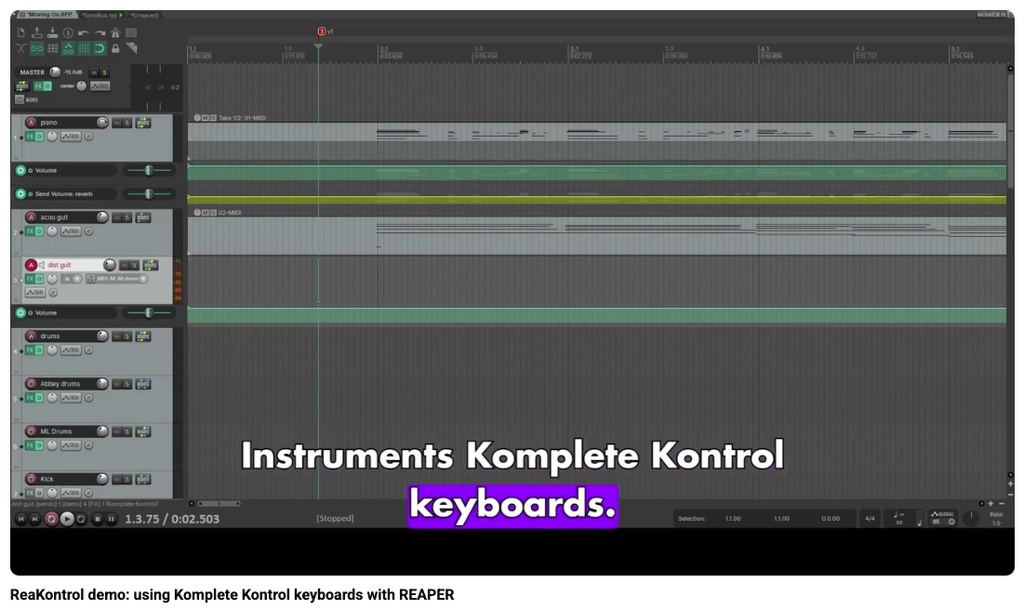
Native Instruments Kontrol keyboards have long offered deeper integration in officially supported DAWs like Logic Pro and Ableton Live — but REAPER users, including many who rely on REAPER’s strong screen-reader support, have historically gotten a thinner feature set. ReaKontrol, an open-source extension built by developer Jamie Teh, closes that gap. Jay Pocknell’s write-up explains what the extension adds, points to Jamie’s demo video, and highlights how community-built tools are stepping in where commercial support hasn’t yet caught up — a pattern worth watching for anyone thinking about accessible DAW integration.
Summary: Accessibility in Audio Tech – Audio Developer Conference 2025
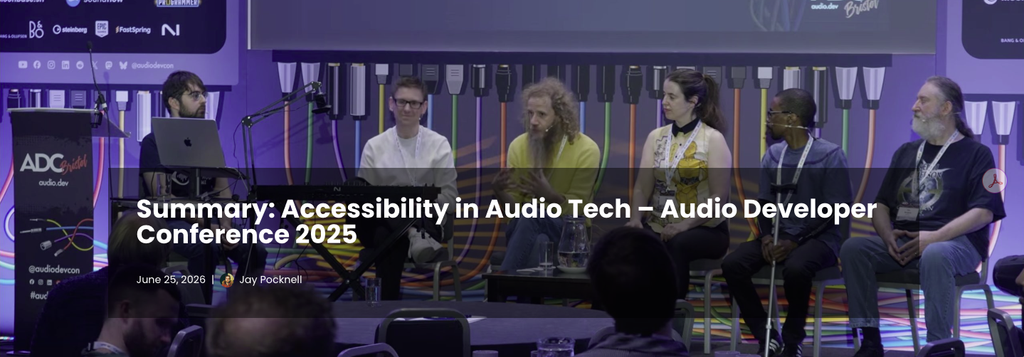
This recap covers a workshop at the Audio Developer Conference 2025 that brought together developers, accessibility specialists, and disabled musicians and creators — several of them familiar names in the MIDI Association’s own accessibility conversations, including Sam Prouse, Scott Chesworth, and Tim Burgess. Sessions ranged from the social model of disability and the principle “nothing about us without us,” to hands-on technical ground: focus management, tab order, and accessibility APIs for screen reader support; workflow efficiency versus baseline accessibility, illustrated through REAPER’s OSARA extension; and a look at Native Instruments’ Kontrol Accessibility Helper app for controlling hardware without a visual interface. The throughline, per Jay Pocknell’s summary: accessibility works best as a foundational design principle, not a feature bolted on at the end — and it has to be maintained through every subsequent update.
Making Digital Mixing Consoles Talk, with DiGiCo and the Audio Accessibility Alliance
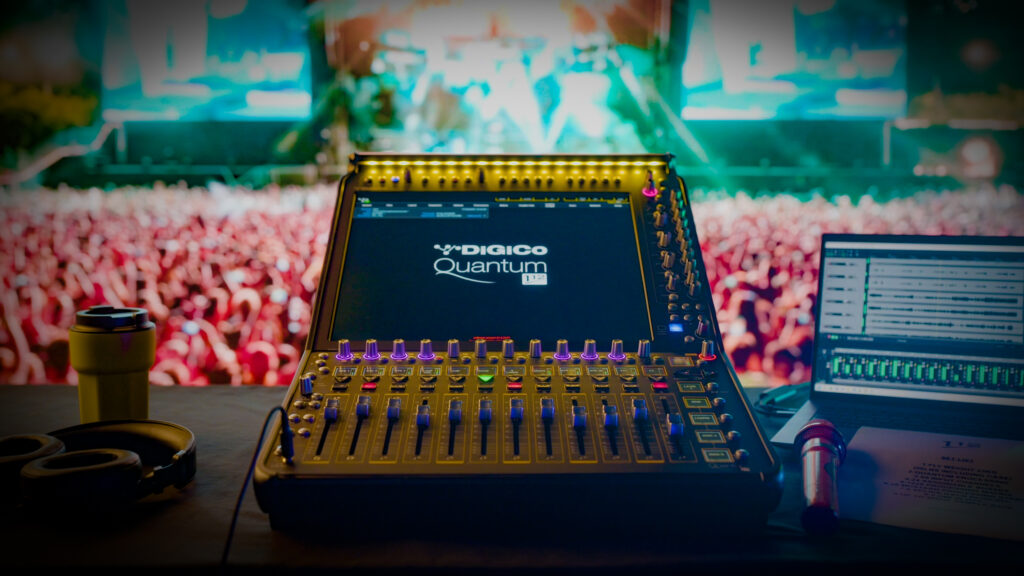
This one lands closest to home for MIDI.
Jay Pocknell reports on DiGiVoice, a prototype DiGiCo has built for its Quantum 1 digital mixing console that adds spoken feedback for channel names, control levels, parameter values, and control states — the console sends text over the network to a companion app that converts it to speech.
The piece was developed with the Audio Accessibility Alliance and features Jon Lemon, an award-winning mixing engineer with Stargardt disease, Michelle Guadalupe Felix Garcia, an audio engineer and advocate for blind professionals in live audio, and DiGiCo’s Head of R&D, Mike Aitchison.
The article is careful to note that accessibility “involves more than simply making everything on the screen speak” — speech rate and verbosity need to be adjustable, and speech shouldn’t be the only output on offer; the piece also flags braille displays, braille input, and magnification as directions DiGiCo is exploring.
Most notably for this community: DiGiCo intends to eventually publish DiGiVoice’s communication protocol and voice application as open source, so other manufacturers can build to it rather than everyone inventing their own approach from scratch.
Why this matters for MIDI
Each of these pieces touches something at the center of the MIDI Association’s Profile for Assistive Text: instruments and software that can describe themselves to the assistive technology a musician already uses, whatever that technology is. Roland’s guides show what manufacturer-led accessibility documentation can look like. ReaKontrol shows what community developers can build when official support falls short. The ADC 2025 recap lays out, in the words of the people doing the work, what “accessible by design” actually requires.
But it’s DiGiVoice that comes closest of all five: a console describing its own channel names, levels, and parameters as text, over the network, to whatever’s on the receiving end — which is close to exactly what the Profile for Assistive Text is meant to standardize across the industry.
Sound Without Sight’s full knowledge hub, along with its webinars, mentorship program, and community drop-ins, is open to musicians, developers, and manufacturers alike at soundwithoutsight.org.Why this matters for MIDI