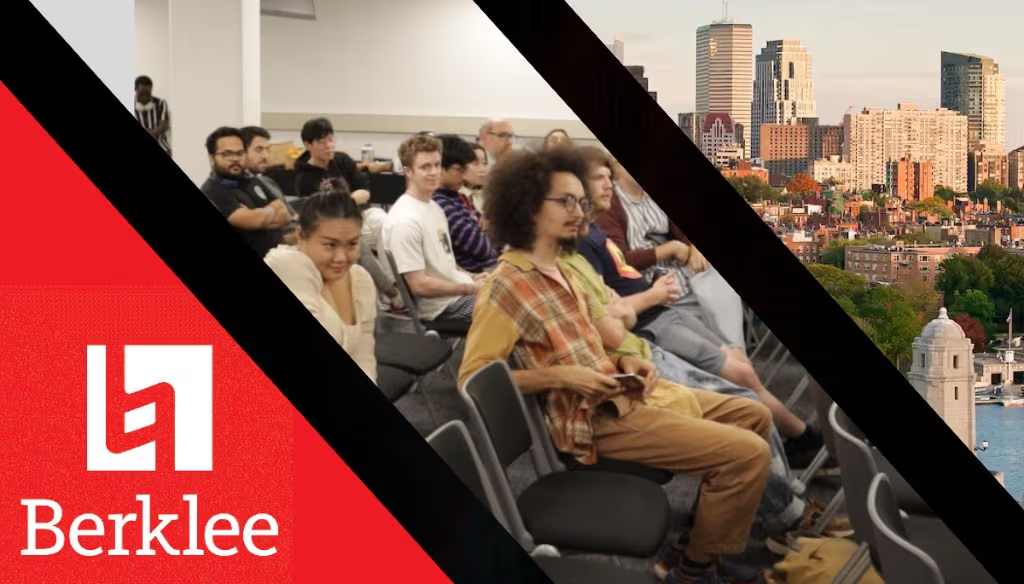

The MIDI Association will participate in Berklee’s AIMS: AI Music Summit in Boston, June 3–5, 2026, with a demo booth open to attendees on June 4 and 5 from 3:00–5:00 PM.
AIMS brings together musicians, educators, developers, researchers, students, and industry leaders to explore how artificial intelligence is changing music creation, production, performance, education, rights, attribution, and creative workflows.
The MIDI Association’s participation highlights an important issue for the AI music community: as new creative tools emerge, they need open standards that allow instruments, controllers, software, learning systems, accessibility tools, and AI platforms to work together.
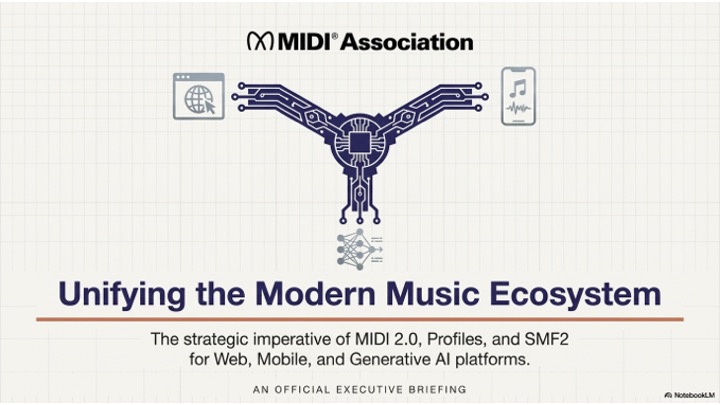
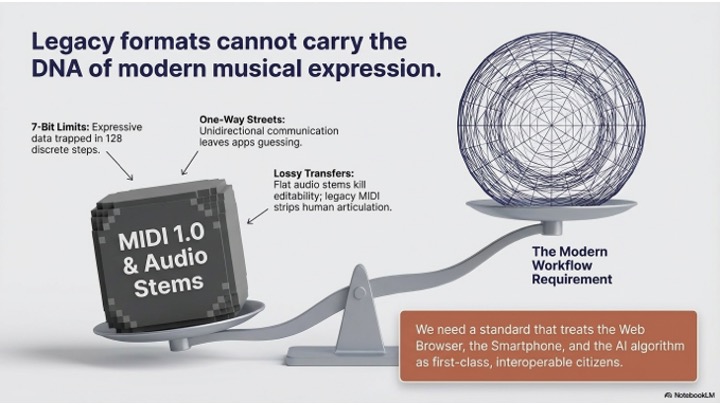
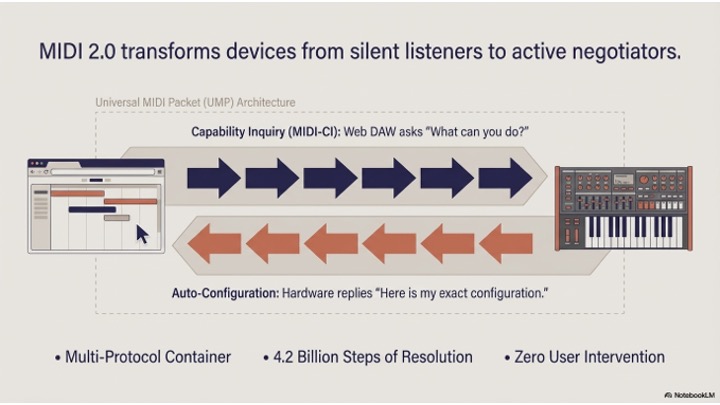
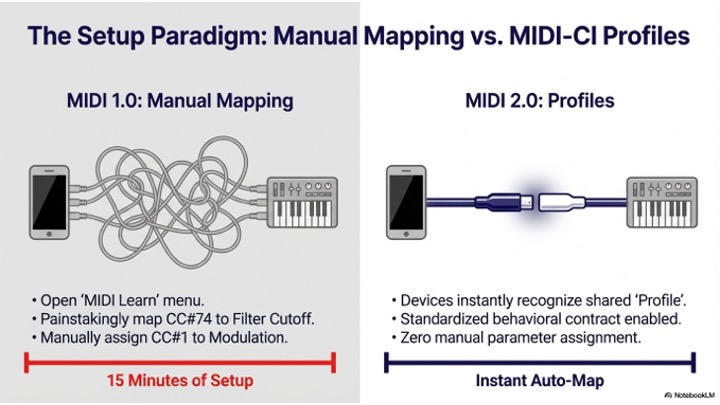
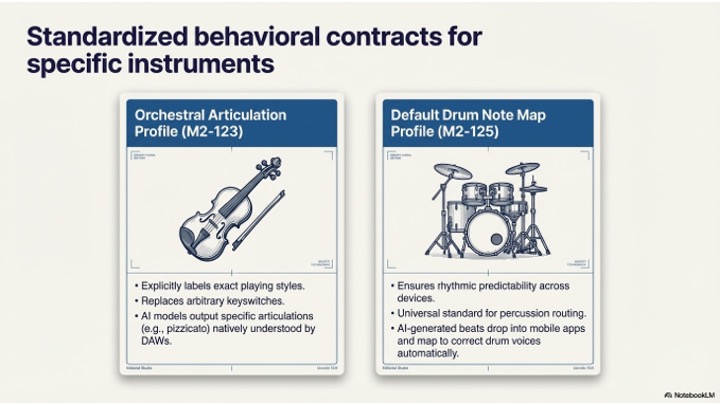
MIDI has provided that common language for more than 40 years, and MIDI 2.0 extends the foundation with higher-resolution control, greater musical expression, and richer communication between devices and applications.
Visit The MIDI Association Demo Booth
Attendees are encouraged to visit The MIDI Association demo booth to learn about current MIDI initiatives, MIDI 2.0, music accessibility, education, interactive audio, and the role of interoperability in AI-powered music technology.
- Dates: Thursday, June 4 and Friday, June 5, 2026
- Time: 3:00–5:00 PM
- Location: 132 Ipswich St., Second Floor, Room 204
- Format: Interactive demo booth and technology showcase
The booth will be a place to ask questions, see practical demonstrations, and discuss how MIDI can support new AI-assisted creative workflows while preserving musician control, expression, and interoperability.
MIDI, AI, and Accessibility
The MIDI Association will also support an accessibility-focused challenge connected to the AIMS Music Technology Hackathon on June 6–7.
The challenge asks a simple but important question: How can MIDI and AI help remove barriers so more people can make music?
Accessibility is one of the most important areas for music technology innovation. For many people, conventional instruments, controllers, software interfaces, and production workflows can create unnecessary barriers. MIDI helps address those barriers because it separates musical intent from any single physical interface. A musical gesture can come from a keyboard, adaptive controller, switch, motion sensor, eye tracking system, voice input, touch surface, or a completely new interface designed around the needs of the performer.
Hackathon participants are encouraged to explore adaptive instruments, accessible controllers, AI-assisted composition tools, inclusive DAW workflows, simplified music learning interfaces, alternative input devices, and systems that translate new forms of input into expressive musical performance.
This challenge reflects the work of The MIDI Association’s Music Accessibility Special Interest Group, which brings together musicians, developers, educators, companies, and accessibility advocates working to make music creation more inclusive.
Connecting with the AI Working Group Community
The MIDI Association’s presence at AIMS also connects with the broader work of the Interactive Audio Special Interest Group and its AI Working Group, where audio professionals, researchers, composers, sound designers, programmers, and developers explore responsible and creative uses of AI in interactive audio.
Topics such as adaptive music, procedural sound, voice and dialogue systems, accessible interfaces, and ethical AI practice all depend on clear communication between tools. MIDI and MIDI 2.0 can help provide the interoperability layer needed for these systems to become part of a larger creative ecosystem.
Why It Matters
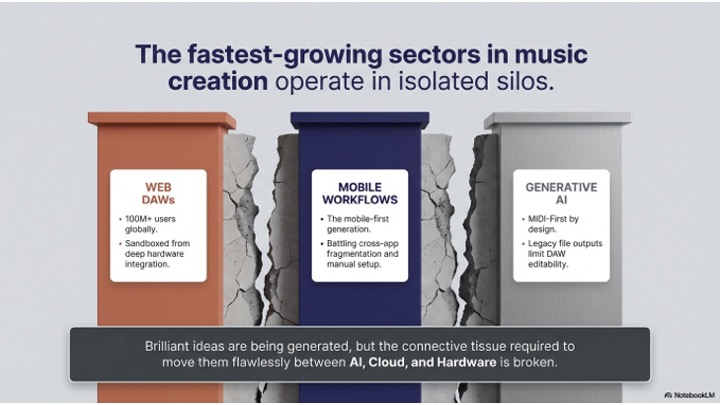
AI music tools are developing quickly, but the future of music technology should not be built around isolated systems. Open standards such as MIDI help ensure that creative tools can work together, remain musician-centered, and support innovation across instruments, software, education, accessibility, games, and interactive media.
If you are attending AIMS, please come see The MIDI Association demo booth, ask questions, and learn how MIDI is helping shape the future of AI music technology.
Visit The MIDI Association demo booth June 4–5, 3:00–5:00 PM, at 132 Ipswich St., Second Floor, Room 204.